September 23, 2005

I May Be Blind and Dead, But I Got Your Attention

Speaking of conspicuous DVD packaging (see the previous blog entry's talkback), the little gewgaw on your left arrived at FFC HQ today from Blue Underground. It's a casket-shaped box set housing all the films that constitute Amando de Ossorio's "Blind Dead" series, a bonus disc dedicated to the late Ossorio's exploits, and the 2005 edition of Nigel J. Burrell's monograph Knights of Terror: The Blind Dead Films of Amando de Ossorio (which looks like a fabulous read). After the brouhaha over the "Homer head", I wouldn't be surprised to see fewer and fewer of these impractical objets d'art put into production--but might I suggest that for those seminal works not necessarily on the zeitgeist's radar, the nonconformist approach to packaging is a necessary evil? They need the beacon; if I had a nickel for every time I unwittingly flipped past some cultish find while cruising the record store for same, I'd be Harry Myers, "An Eccentric Millionaire."

On a side note, the DVD I have most coveted in the history of the format is finally coming out on November 22nd. Can you guess what it is?

September 21, 2005

Notes from the Trenches


Conducted a discussion after a screening of Sullivan’s Travels at the Denver Public Library last night – a good show, a good chat – with over fifty people which is, actually, not a bad turnout considering we were up against the inexplicably revered The 39 Steps across town as part of my friend Tom’s Denver Art Museum series at the Starz Filmcenter. An unabashed fan of Hitchcock – I think he reached his pinnacle in Britain with The Lady Vanishes (fond, too, of Young and Innocent and The Lodger), and feel like The 39 Steps is something of a piddle. Big fan of Hitch’s first U.S. film, Rebecca - Fontaine, Sanders, Olivier, and, of course Judith Anderson’s iconic turn as Mrs. Danvers – use of subjective point-of-view for an eternally-unseen heroine a precursor in a lot of ways to Preminger’s Laura and a nigh-pioneering work of queer cinema. Hitch made a few of them – just not The 39 Steps.
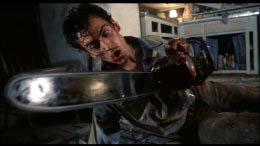
A fairly light week for screenings and so: a chance to dive into the DVD queue. Coolest new title? The new Book of the Dead edition for The Evil Dead II. Knocked off several others in the last few days, too, but because I wrote something like 10,000 words in about 20 increasingly-weary hours, I’m guessing Bill’s got some fairly grisly, fucked-up prose to edit. Watching the X-Files: Black Oil set now – been watching it on and off for about a month-and-a-half. Shit’s awful – and it’s got lots of special features.

I didn’t get the studio schedule for Monday until today and so missed a screening for that disco/rolloer-skating flick Roll Bounce (thank god) – I’ll catch it in the second run. Also missed the only screening of Flightplan because of my obligation at the library. I’ll see the Jodie Foster on Friday afternoon and intend to catch Everything is Illuminated tonight. With a Sunday Feature interview to write-up tonight, though, I’m not sure I’ll get a review for the Elijah Wood flick logged before deadline. Which brings us to: what’s happened to the Sunday Feature? Was a while there, we were going great guns with oven-fresh interviews if not every week, then at least every other.

Here’s the scoop.

Bill and I decided that we were tired of doing interviews.

90% of the people that you talk to in this business (99% of actors), don’t really have anything to say and some (say 10%?) are obnoxious when they say it. There’s the director who demanded a hair stylist and complained to her studio when I gave her a bad review even though I was nice to her during the interview (she accused me of telling her that I liked her film so I just turned over a copy of the tape – controversy ended) – and the guy who did the same because we shared a couple of tears over recently-lost parents (didn’t make me like the movie any better). It’s hard on me though, the people who can’t separate what it is that I do with what they do – there’s a good, solid reason that we have a standing policy of logging the review of the film before interviewing the subject.

On the other side of it, there are the interviews that I’ve conducted that I later find that I can’t use. I had a long heart-to-heart with Lili Taylor a couple of years ago, only to find that I couldn’t bear to listen to it again afterwards: too personal – just a conversation between two strangers that, for about an hour, talked to one another about things that wouldn’t be interesting to anyone else. Truth is that it’s probably just me being a coward, but there you have it. And a chat with author/historian/filmmaker Paul Cronin that turned out to be a two-hour bitch session about the state of modern film, film historians, and the death of the cinematheque tradition. A Londoner, he was appalled that our central library is closed one day a week (something our mayor recently addressed by shortening all the hours and cutting staff – if we eviscerate government by not paying taxes, you see, we lose all of our public works) – and even more appalled when I told him that for a while there, the DPL was recognized as one of the best central libraries in the country. It is, at the moment, a siege where the focus of every right-wing, racist wacko (Colorado’s own Senator Tom Tancredo is about a half-step away from wearing a hood and hanging the help off the Cyprus trees in his front yard – do a Google search on him, you’ll love it) wants to squat and make a point about how the government wastes money: all this while we’re blowing a few billion a week in the most unpopular war since 'nam.

Hey, where’d this soapbox come from? See? Two hours of that.

A good story as sidelight: when I interviewed John Boorman, I had a terrible cold and while transcribing, realized I’d been mouth-breathing, semi-heavily, into the receiver so that Boorman most likely thought I was jerking off while I was talking to him. Suddenly the question about who the good guys were in Deliverance probably made a lot of sense.

The worst thing about interviews, though, is this presumption that because we’re primarily Internet-based, that we’ll take anything and, on the other hand, that we need to constantly justify ourselves to anyone who might consent to sit with us. If you write for a major daily, Quentin Tarantino will spend fifteen minutes giving you the party line no matter what how you write and what you have to say – if you write for Film Freak Central, a publication that reaches roughly seven-times as many readers on any given Friday (and all of them tuning in to read some fairly specific material) than almost every major daily in the country, you need to convince Paul freakin’ Reiser’s people why it is you’re worthy to sit in the same room with him. So, thanks, and no thanks all the same. I skipped two screenings of Reiser’s film on Monday and declined an invitation to talk with him on Tuesday once the credentials were checked and we were graciously given the greenlight. I look back on the people we’ve devoted pages and pages of space to and wonder how it is that it doesn’t buy us a little grace with 9/10ths of the major studios and boutiques.

The answer’s a pretty simple one so far as I can see it: Sony Pictures Classics and their local representative respect the work that we do and, despite the write-ups I did on Dan Harris and the Maria Full of Grace people, continue to desire the publicity that an actual dialogue can provide for their pictures instead of a dedicated pimping of the party line. I can’t prove it, but I’m deeply suspicious that the write-up I did for the junket trip I took for Eternal Sunshine of the Spotless Mind put us on some shitlists but deep. It makes me wish I could go back and actually name specific names. The result is a lot of fighting and scratching for a lot of missed connections and lamented opportunities. Bernardo Bertolucci – one of the great champions of the Cahiers du Cinema and guerilla criticism, declining in his decline to do any non-major-daily press is one thing – but never getting a call-back for the vast majority of our requests feels different. Even a “no, thank you” is preferable to a flat, cold snub: that chill, cosmic “no thanks, but how about Paul Reiser? um. . . Peter Riegert?

Then there’s the story of Gregg Araki who had someone at his tiny distribution company, unbeknownst to us, audit the questions I might ask him ahead of time. Sorry, Gregg. Cronenberg and Morgan Freeman and John Sayles, Errol Morris and Steve James and Paul Schrader didn’t ask for question approval – I don’t think we’re addled enough yet to bestow upon you that dubious honor.

So the short of it after the long of it is that Bill and I decided to take a break from the Sunday Feature in the hopes that one or both of us would feel like rejoining the fight. Frankly, I still don’t remember the prize yet well enough to care.

ADDENDUM

Everything is Illuminated = The Wizard of Oz + The Holocaust - this is the poppy field
there, now you've seen it

Went to the screening of Everything is Illuminated tonight at one of Denver's older Landmark theaters - small seats, narrow theater, small screen, reek of butter and popcorn. Gotta love it. No cell phones went off, only one person checked their messages, but - and this is a big but - a young woman sitting behind me and to the right would not shut up. You know the type - giggly, garrulous. She would repeat the last thing that people said in the film and laugh, she would coo whenever she saw a dog, she gasped in dismay when the main character discretely and in character, kills a grasshopper, she commented upon a character's suspected zodiac sign ("Oh, that is so Sagitarius!") - and when asked to be quiet, she huffed and declared "But I'm not bothering anybody!". Then she started again. I spent the last half hour of the film standing, leaning against the back wall of the theater, having left my seat to cool in the spit-flecked parabola of my own self-appointed Greek chorus.

Oh, and the movie's not all that great.

September 19, 2005

Steven Spielberg Memorabilia


So we go into Deseret Industries (an LDS owned chain of thrift stores for those of you living elsewhere on the planet, this is where Napoleon Dynamite found his tape) looking at furniture when I find a novelization of Close Encounters of the Third Kind authored by the director/screenwriter Steven Spielberg! Hardcover first edition. Two dollars. Then in the games section there is the E.T. board game! One dollar.

I like Spielberg a bit more than my peers I think. I don't think that he's gone rotten, his work is just particularly uneven. Sometimes great and sometimes just blah. War of the Worlds is still going to make my end of the year top ten. But I have to say, he used to be really cool. I thumbed through the novelization and while I can't say that it looks like particularly great literature it's sort of surprising how much of Spielberg's aesthetic seeps through. There is something delicate and loving, something empathetic about his description of Barry's (the little boy) room. This was a valuable find.

The E.T. board game was missing most of the pieces. It was supposed to have a plastic E.T. and a spaceship and a deck of cards. There were no directions, but from the looks of it, it seems to be a rip-off of Parchesi. For a film that treated it's audience with so much respect (my wife, seeing it for the first time, expressed gratitude that it never sugarcoated anything for it's target audience) this board game seems to be in line with E.T. merchandise such as the infamous Atari cartridge that seek to cynically rip-off their fans.

Above is what it is suppose to look like. Whoever owned it last also added a box of crayons to the set. Deseret Industries, the reputable business that they are, sold this to me "as is" without specifying what, if anything, was missing. I'm sort of reminded of how thrift store owner Edith Massey sold bags of bottle caps for fifty cents as "grab bags".

I stole that photo from E-bay where the starting bid is also one dollar, but shipping and handling is eight though. Despite being suckered twice over, one dollar seems to be a small price to pay for the indignity.

September 18, 2005

Sturges und Drang

Preston Sturges made something like a dozen films before he blew himself out in a blaze of creative glory, but for the short time that he was on top of the world, he made movies that no one had ever seen before in ways that wouldn’t become part of the comfortable vernacular until the Coen Brothers and Charlie Kaufman came on the U.S. scene. I watched Sullivan’s Travels again last night in preparation for a speaking engagement this coming Tuesday at the Denver Public Library (6:30pm and free, come and see me if you’re in the area), and was astonished at how often the Coens had gone to Sturges – and this film in particular – in their work.

O Brother Where Art Thou?, of course, the title of the film that Sullivan’s Travels’ director hero John “Sully” Sullivan (Joel McCrea) wishes to make instead of all the populist comedies he’s become famous for, features swamp-bound chain gangs, spirituals, watching “picture shows” – but also the deadpan portrait from The Ladykillers, the hysterical Hollywood boardrooms and frustrated artiste of Barton Fink, the rapturous forest tracking shots of Miller’s Crossing, and the broad smalltown slapstick patois of Raising Arizona. It even has moments of courtroom hijinks (Intolerable Cruelty) buried in there, while over the course of Sully’s four “travels,” what comes clear is the kind of post-modern ironic structure of Kaufman’s adaptation..

It’s a complicated work – more’s happening in any ten minutes of Sullivan’s Travels than most any other film from the American thirties and forties (save Hitchcock’s and Capra’s) – one that encompasses so many different genres that the original ad push for the film pretty much focused on Veronica Lake’s trademark bangs. From its first moments on top of a rushing train straight into the kind of chamber/help comedy that RKO minted in its thirties production and then fast into a road trip, a comedy, a racial rue, a pinioned skewer of social classes, a shot at the media and legal systems, and finally a much-debated epilogue that I choose to read as ironic instead of compromised. It goes from full-on comedy to full-on drama and it does both with such casual ease that it feels organic.

McCrea justifies my affection for him from Foreign Correspondent and Lake is a vision of tomboy sex mystique that puts Lauren Bacall to shame. Guess she was a few weeks pregnant during filming – remarkable for the amount of physicality her role requires. Sullivan’s Travels is a post-modern film made sixty-plus years ago – smart, courageous, and a giant middle finger offered to the hand that feeds. One of the great Hollywood satires, and as such one of the great American satires, it’s my favorite of Sturges’ films in all its messy, schizophrenic, glory. The only thing that makes sense about the film all the way through is its sense of outrage – its absolute incandescent indignation over the status quo in art and culture. Sturges spoke his mind about all manner of injustice, and he did it with a puckish glint in his eye. A great filmmaker – and in the history of American flickers, one of the greatest; primed now more than ever for a popular rediscovery.

September 15, 2005

Notes from the Trenches

Just a couple of screenings this week, one of them the Miramax/Louisiana-based bayou thriller Venom that was a late blip on the radar and, consequently, scheduled at a conflict. Guess I’ll have to catch it at the dollar theater in a couple of weeks. With most of the local major daily crix in Toronto, there’s just not much scheduled for the rest of us and so I made some progress for the first time in months on my DVD backlog for the site as well as coming to terms with screeners of stuff like Darwin’s Nightmare, The Tunnel, Cronicas, 9 Songs and Kings and Queen with which I’ve been steadfastly avoiding eye-contact. There are something like a dozen films opening this weekend though, and with Bill busy at TIFF (and him not the only one, of course), I’m thinking there’s some kind of method to the timing of this release-glut.

Biggest disappointment of the week is
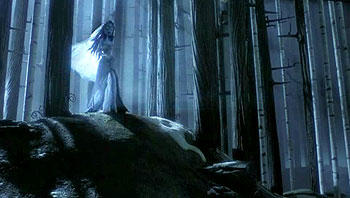
Lord of War - a film that I was really, really looking forward to; while the worst film of the week (not having seen Venom, remember) is Just Like Heaven. I interviewed Mark "Daniel's brother" Waters once upon a time and even asked him about his insensitivity towards Asians – wish now that I’d pressed him when this film marks the third consecutive time that he’s taken a potshot at the poor ol’ slants. Best film of the week? Corpse Bride. It’s marvelous. Speaking of Andrew Niccol, the special version of The Truman Show isn’t really worth it – but the film itself is worth a revisit. I’d argue that it’s more topical now than it was seven years ago: check out the travel agency scene.

Of the ongoing journal of the inevitable rudeness at the public screenings: Corpse Bride, Just Like Heaven
- only a cell phone answerer in the former, a woman who answered it not once, but twice, and repeatedly checked messages throughout the film. Her section got agitated, but no one said anything. Wouldn't have made a difference. A local critic sitting next to me used his flashlight a couple of times but as that’s the recommended way that one Christian yahoo is advising folks to see March of the Penguins (with a downloadable checklist, pen, and flashlight so as to mark off what God says to them and how during the film), I guess it’s something we should just hold our ankles for as Chronicles of Narnia slouches its way towards Bethlehem, carrying in its noisome wake busloads of folks who rented The Omega Code on VHS. Before the Corpse Bride screening, however, was my first look at the long-version of the trailer for Harry Potter and the Goblet of Fire.

It looks astonishing and, along with Peter Jackson’s King Kong, becomes the two films my viscera most wants to see this fall. Child of the Blockbuster - I'm helpless. The only real irritation during the Just Like Heaven screening were the weepers and the applauders, giving this appalling shipwreck the gold seal of middlebrow approval that means that Reese Witherspoon continues getting stuff that’s beneath her and Mark Ruffalo continues getting shoehorned into generic hunk roles when, let’s face it, he’s got just the right testosterone-injected skeeze to be something special.


Only one speaking engagement, a screening of the restored version of the 1942 re-mix of Chaplin’s The Gold Rush (1925) – a film that was cut by twenty minutes by Chaplin, narrated and scored (by Chaplin) to, in part, retain its copyright, and then restored to 72min for a late-70s re-release.

The 1925 original is better, goes without saying, not the least because of the original ending which saw the little Tramp kissing Georgia as a photog complains that they’ve “ruined the picture.” Self-awareness in the Gilded Age, the Roaring Twenties never got so melancholy, seriously, as it did in this flick’s “Auld Lang Syne” setpiece and its coded epilogue. The new version ends on the happy couple climbing some stairs – a happy ending that the piece doesn’t deserve to be saddled with into eternity. Alas, I don’t make these decisions for this series (at the Denver Public Library) and the audience had a great time regardless - brings up the question of director's cut pics, though, now and always.

The real tragedy is that this series is programmed directly opposite my friend Tom Delapa’s Alfred Hitchcock series for the Denver Art Museum. The screening of The Lady Vanishes, a turn-away crowd – but because my show was over early, I made it in time for the last ten minutes of the film (a ravishing 35mm print) and for all of the post-film discussion.

It’s a rare thing for a town like Denver to have that kind of choice on the same night: The Gold Rush or The Lady Vanishes, both with “professional” moderation and guided discussions (Tom’s a pro, I’m still paying for my own health insurance). It’s not much, especially in comparison to the cinemateque wonderlands of New York and Los Angeles, but it’s a start, goddamnit.

Next week, Sullivan’s Travels vs. The 39 Steps. Hate to say it, but even if I wasn’t doing the yakking, I’d choose Sturges over Hitch on this one. (Just finished re-reading Manny Farber’s piece on Sturges by way of research, by the by, and, holy crap. Sometimes Farber is just cross-eyed badger spit, but the man had a mystique about his writing that’s close to ecstatic.) Have to say that I feel a little rejuvenated after Corpse Bride - a film that for whatever else you might think of it, is alive in a way that most films aren’t anymore. It breathes, man, like it’s made of nerve-endings and synapses, and it couldn’t have come soon enough.


More Two-Second TIFF Reviews

Wassup Rockers (d. Larry Clark)
Somehow the most humanistic film of Clark's career is also his most nihilistic. Nice to see him acknowledge the "other," but they're still skater punks. *** (out of four)

Romance & Cigarettes (d. John Turturro)
A fugue. In the words of David Lynch, "Fugues make me crazy!" Actually eager to rant about this one. *1/2 (out of four)

All the Invisible Children (ds. Various)
As with any omnibus film, hit-or-miss. I think I liked Kátia Lund's segment best, but John Woo does his best work since heading West. Your mileage will vary. **1/2 (out of four)

September 12, 2005

Excuse Me For Living: A Film by Atom Egoyan

It's rare that Canada produces something as completely batshit crazy as Where the Truth Lies. Atom Egoyan is usually quite retiscent: if he tends towards a non-naturalistic style, it's of a chilled thesis-statement variety rather than Ken Russell freak-out time. But pushed into a corner by changing funding rules, he's desperately in need of a hit, and thus tries out the Goodfellas/Boogie Nights showbiz orgy genre with spectacularly deranged results. He's waded into waters- that of excessive people trying to gratify themselves with as many drugs and sex partners as possible- in which he's hopelessly unqualified to swim, and comes up with the traumatic anti-sex downer that Larry Flynt will watch on a loop in Hell.

Only Atom Egoyan could think of Colin Firth and Kevin Bacon as ideal choices for a Martin-and-Lewis comedy team- the latter seems like an angry drunk, and the former like a private-school headmaster moonlighting for kicks. And only he would direct Alison Lohman to play a manipulative journalist as a guilt-ridden convent school girl- as if anyone determined to wheedle out facts for money would be such a passive wuss. But there they are, with the duo trying to cover up the sex-murder (by whom?) that destroyed their partnership and the latter ineptly sleuthing for the person who pulled the job.

The milieu, as it turns out, is wholly inappropriate to the man who gave us feel-bad epics like Exotica and The Sweet Hereafter. The we-had-evil-fun-and-then-it-all-fell-apart genre at least acknowledges the pleasures that will be paid for in the final act. But Egoyan can't even do that: you cringe when anybody smiles or shows naked flesh, because you know the hammer of shame is going to crash down on your head not long afterward. But Egoyan half-thinks that he's playing by the rules, meaning that he pours on the period outfits and ladles on the 50's/70's soundtracks. The trappings of fun are there, but they're administered by a man who makes Woody Allen look like Ted Nugent.

Atom tries to have it both ways: a sexy movie that hates sex and some non-subersive genre subversion. He can't just have an Alice in Wonderland pageant at a children's hospital: it's got to be one where Alice breathily sings the Jefferson Airplane's "White Rabbit", so you know there's, like, subtext. Never mind that any parent would be horrified by the incursion of that druggie classic (and that any child would be given nightmares by the enormous Cheshire Cat head); never mind that the scene plays like something written by people on the planet Mars. Atom's got a point to make, and little things like sense don't enter into it.

And at last, there will be no more denying Atom's deep-seated fear and resentment of women. Self-decieved fool that he is, he thinks he's progressive for eviscerating the lie of the comedy team and through the conduits of Lohman and the corpse of Rachel Blanchard; but the women turn out to be thoughtless parasites who poison the men with guilt and responsibility. He turns the gun on himself because he thinks a woman is telling him to: thus he carries out what really isn't asked of him while hating the person who's egging him on. As a series of evasions of this final fact, the film is breathtaking in its contortions and shattering in its nihilism.

The ironic thing is it's the most entertaining movie Egoyan's ever made: you'll laugh, you'll gasp, your eyes will pop at every ill-advised moment. There's always something crazy going on in this astounding folly, which will leave you stunned at the magnitude of its insularity and self-deception.