April 10, 2006

Notes from the Trenches

Setting up a nursery tonight after months of procrastination: we’re checking into the hospital at 10:00am MST, having the c-section at 12:00pm, and being a household of four, officially, if all goes well not long after. Last few days have been a flurry of activity punctuated by long nights tossing and turning and thinking of my father who passed away about a month to the day before our first was born two-and-a-half years ago – why is “guilt” a major player again? In any case – too much on the back burner and am looking forward, perversely, to the time off after the birth to get my proverbial house in order and a few dozen titles off my backlog. The Landmark city manager out here is about a hair’s breadth away from sending out an APB on my AWOL ass. Might try to catch a morning screening of The Notorious Betty Page on Tuesday, depending on the hospital situation. It’d be nice to get back into the flow of it before the new baby makes life, and juggling responsibilities, suddenly a lot more interesting.

I did manage a screening of Akeelah and the Bee last week, a film that I won't review because of a conflict of interest that I have with the Starbucks corporation (and their employment of someone near and dear to me), and so all I can say is that unless things change, I won’t be able to put it on my bottom ten for this year. Think: more WWII Asian stereotypes from the fine distributors of Crash and the terms “looking like Rosie Greer” and “unfortunate echoes of What’s Love Got to Do With It?” and let’s leave it at that.

Did a fruitful Q&A of Spider with an extremely receptive audience at tiny Gilpin County Public Library and will do another with the same film at the comparably-sized Lone Tree Public Library this Friday. Spider has become one of my favorite speaking gigs – not just for its complexity and spare beauty, but because every time I show it, it becomes someone’s favorite movie. It’s also a lot less controversial than History of Violence: a picture that I’m finding it hard to show because of exhibitor squeamishness. Wenders says something about titles that are too programmatic and damned if he doesn’t make a fine point.

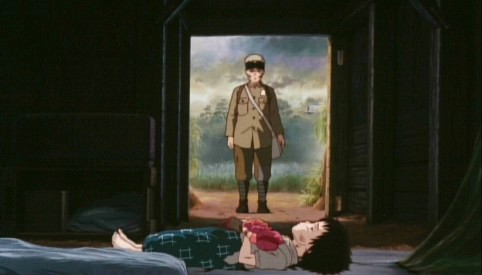
Later this month will find me speaking after a screening of Grave of the Fireflies while a local rotary club has asked me to keynote one of their monthly meetings next month. The Vail Symposium, under a new director, has called asking for ideas for a summer series and the Beaver Creek Film Festival is looking to expand with me along for the ride in some capacity. What’s that smartass Chinese curse? May you live in interesting times.

The DPL cinema club series is currently in the midst of screenings for Classic Westerns: Stagecoach, The Ox-Bow Incident, and Ride the High Country (discussion later this month, too) – and I’m continuing to get nice feedback for the Vail Fest’s panel – all in all, an overwhelming, exhausting, draining few days.

Apologies for the brevity and in-eloquence of this week’s post – got about an ounce of reserves left before it’s just fumes to the horizon.

Reading a remarkable collection of interviews done by the AFI and George Stevens, Jr., by the way - one that includes an invaluable chat with James Wong Howe: one of my favorite cinematographers of all time. There just aren't enough interviews with cinematographers. Currently reading the King Vidor and am mesmerized by his description of the tracking shot up the stairs in his The Crowd and how it paralleled, unconsciously, a bad memory of his from childhood.

It calls up the question of what your fave individual shot sequences are in film: whether or not they live in films of any relative value. My happiest Wong Howe moment is the grape-stomping scene during the bacchanal of Seconds' California fandango and the image it conjures of the conservative shutterbug, climbing in that vat with Rock Hudson and a few naked hippie chicks - I was saddened to learn that he and Frankenheimer had a falling out late in both of their careers. Odd one that comes to mind is Jackie Brown in the parking lot right after DeNiro kills Fonda: the sound editing in there is nigh orgasmic.

Here’s the screen capture, an easy one I think – see you on the flip, when my life is completely different again:

April 03, 2006

Notes from the Trenches

Working on this very piece tonight, I hear a racket from the backyard, open the door to find my dog a bloody mess. Got tangled up with something or another nasty back there and now, three hours later and five hundred dollars poorer, my pooch has something like forty sutures in her and enough morphine to kill a horse and I’m looking at not making the mortgage payment this morning. Hard not to feel sorry for myself today, turned 33, wife too pregnant to do much celebrating, and now I’m crawling into bed covered in dog blood and looking into taking out another loan in the morning so we’re not on the street come summer.

Yesterday, though, spent the morning at Vail for a critics’ panel discussing film criticism (among other things) and how it’s been changed in the digital age. For all that, I was the only Internet critic on a panel that included Entertainment Weekly’s Owen Gleiberman and the Independent Weekly’s Godfrey Cheshire. Felt good to be there. Felt a little like a validation – particularly when I was referred to as possibly the best "non-analog" critic in the country.

I think I’ve made a friend of Cheshire, at least, who’s as affable and well-spoken in person as he is in print. Gleiberman seems a nice chap as well though I did disagree with him over a few things: his worst crime might be that his position as one of the most-read analog critics in the land insulates him from a lot of the indignities and outrages that I try to articulate once in a while here. When he and Cheshire talked about private screenings in lushly-appointed screening rooms in New York, I think back to the other day at a local mall’s multiplex amongst the abandoned popcorn bags and the stench of old nacho cheese, watching Basic Instinct 2 with my colleagues while overhearing one of them talk about how much he hated Citizen Kane because it was, among other things, “boring.”

Believe me when I say that this guy’s not a rebel: he’s just an ill-considered, low-brow boob that doesn’t have an argument beyond “I just think. . .” Hard to keep it level.

Gift bag from Vail included some very nice, expensive male toiletries, a lovely glass, an energy bar, and a magazine with Dennis Quaid on the cover.

Last week also saw me at the Denver Public Library discussing Nimrod Antal’s Kontroll – a film that I was enthralled by upon initial viewing over a year ago, but had cooled on to the extent that it didn’t even crack my top 30 to end last year. Revisiting the film with an audience, however, especially the impassioned comments of one woman I knew from the Argus Film Festival, has renewed my interest in this film as a fairly sophisticated Susan Faludi-influenced look at the destructive component of masculine competition. Coincidentally, as I waited for Raimi to get stitched back together again tonight, read an old Sports Illustrated article about a small town in Maine that had three of their high school football players kill themselves within a short period of time. Fact I learned from the piece that sticks is that while athletes are less likely to try, when they try, they’re more likely to either succeed, or gravely injure themselves in the attempt.

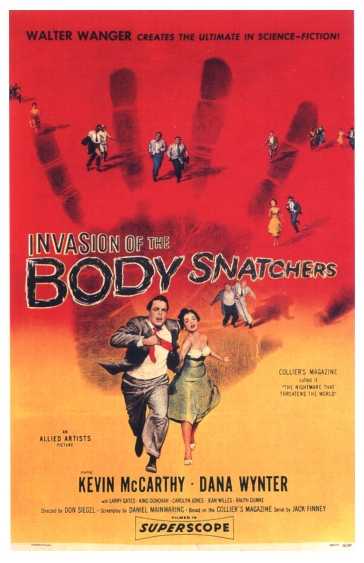
Also last week, presided over the second installment of the DPL’s Cinema Club where we talk about a group of movies that folks have had a month to view. This session included a talk and shot-by-major-shot dissection of The Day the Earth Stood Still, Invasion of the Body Snatchers, the Incredible Shrinking Man, and Village of the Damned. The Cold War was the starting point, but the discussion soon went into a fruitful chat about our current situation in Iraq, about the intense sexual disorder and fear of noir and ‘50s sci-fi, and ultimately the cogent humanity of the WMD solution of Village of the Damned. Most surprising revelation to me was provided by a late arrival who, out of nowhere, suggested that it seemed to him that all the films were about secrets. Simple/complicated.

Anyone catch in Siegel’s Body Snatchers, by the way, the three prints decorating the pool room of the writer-friend? Pretty interesting stuff.

The spider mouth/vagina dentata imagery of The Incredible Shrinking Man, by the way, is a fascinating illustration of that film’s gender-displacement anxiety – among other things, of course. Especially when our tiny hero pinions said vagina with his mighty (pin) prick.

Audience this month twice that of last month. If that trend continues, in about a year, I should have a million people packed into that little conference room. I just hope that we get enough participation that the DPL doesn’t pull the plug for their summer session as they were threatening to do this week (pre-show) when it looked like no one would show.

Last thing: saw Slither late, but in time for a possible Wednesday pub-date on the review. It did awfully in its first week so you might not have much time, but go see it. It kicks ass.

Raises the question of favorite genre actor now that Nathan Fillion is climbing the list for me: gaining ground on the great Jeffrey Combs.

Here’s the capture:
(Hot off the presses - April 5) -

Bill completes (?) his trail-blazing work on "Dawson's Creek" with a review of its final season and finds time, too, to administer the DVD post-mortem on the moribund Fun with Dick & Jane remake. Travis, meanwhile, tackles a little giallo action with his humane treatment of How to Kill a Judge - and proves himself a workhorse with reviews of Chariots of Fire and Adam & Steve. I, on the other hand, only managed to squeeze out a review of Slither - a film I'm going to try to see again before it vanishes ignominiously from the theaters.

April 02, 2006

Subject for Debate: "Battle in Heaven"

Help me, if you will, with a problem that's been bothering me ever since Friday. That is, ever since the good folks at Exclaim sent me to the TIFF screening room to see Carlos Reygadas' latest freak-out, Battle in Heaven. It's frequently questionable; it's often spurious; it largely makes no analytical sense. And yet, somehow, I find myself loving it, in spite of my critical faculties and better judgement to the contrary.

From the first frames, it doesn't take long to see where Reygadas' head is at. He starts off with an ordinary-looking, middle-aged fat man being fellated by an impossibly good-looking young woman. I had been primed by the advance reviews that the fat man was working-class and the young woman was rich and privileged, but the director doesn't let you know until our man is seen following marching military police lovingly raising the Mexican flag. Then we discover that he's the driver for a general (the girl is the general's daughter) and that he's kidnapped a baby for the ransom- only to have the kid die on him. As he stands with his (even fatter) wife as she sells novelties and jellies in a train station, it's obvious that he's not going to get ahead.

So far, so good- a bit obvious (beyond that opener), but solidly in the Oppression is Bad camp. But as he drives that young woman around, it's discovered that this particular general's daughter has a double life as a prostitute. She even offers one of her smokin'-hot co-workers up for him, but he can't get it up for her: our man only has eyes for the General's daughter. Despite the fact that he's been driving her since she was tiny. And it's here that the sticking point comes: what does the girl's particular debasement mean? And how does it complicate the dichotomy of rich vs. poor?

It seems that Reygadas is seizing on the idea that to be rich is to be a young, beautiful girl who is completely unattainable. That is, he places himself (a male director) at the epicentre of oppression and the object of his desire as his master-tormentor. Which is not a good thing. Using one's own sexual frustration as the vehicle for materialist critique is under-the-table all the way: it says more for the frustration than for the critique. You can practically see him nudging the men in the audience and saying "ain't capital a bitch?" and then pointing at the girl. It's reductive, it's shallow, and it doesn't do his cause any favours.

And yet, I found myself enthralled by the film, much more than a Marxist Letters to Penthouse ever could. Every shot is interesting, every cut a provocation; there isn't a dull or predictable association in its visual/editorial arsenal. There's a long sequence shot through the driver's windshield with overlaid with the girl talking to a lover on her cell; her obliviousness and the subjectivity of the camera says it all for being an ignored entity on the fringes of the wealthy and powerful. And Reygadas' total frankness with bodies makes the sex scenes like none you've seen, with bodies explored (or more to the point, presented) with nonchalance and regret. The whole thing is weird with a beard, and with one of those infuriating Bruno Dumont endings that you'd view with contempt if it didn't make you feel thrillingly awful in ways you never thought possible.

So my question is: do the fringe benefits of a bravura plastic artist make up for his not-terribly-bright social reading? Or is the window dressing just distraction from the hole at the centre of his argument? I open the floor for opinions.

March 28, 2006

Democracy in Film Criticism

This book review of the anthology The American Movie Critics is inspiring me to take another look at that perennial issue of democracy in film criticism.

I basically distrust the idea of the film expert simply because so few of them are really experts. There are really three kinds of film buffs: the classic film buffs who are well-aquainted with Hollywood studio films from the pre-MPAA era; the cult film buffs who are junkies for sensation, the Quentin Tarantinos and Psychotronic Movie Guide crowd, if you will, they're well-aquainted with anything "exploitation"; and then there are the art film buffs, who tend to be the most arrogant of the bunch-- the self-proclaimed experts of films. The problem with these guys is that they only watch the "cream" of the exploitation and classic genres. The only way you can get them to watch the "dregs" is if the dregs are playing in theaters across the country and are topical. Because they don't watch the shitty classics and the shitty exploitation films, they're unfamiliar with the genre conventions and can often have a grossly slanted view of something like, say, film noir.

If you think yourself a film expert you sure as fuck better be able to converse fluently about hardcore porn from the early eighties. To say nothing of the
Friday the 13th decalog. I'd also love to hear your opinion on the nine films that James Cagney made between The Public Enemy and Footlight Parade.

It's not just breadth and depth of knowledge about film. I always go back on that rant that these arbitrators of film culture are not experts on psychology, sociology, theology, anthropology, geography, history, or philosophy. Many are well-read, few if any well-read enough to justify their position in deciding what's art and what's not. Are there gradients? I would assume, but as there could hardly ever be anybody who is qualified to be an arbitrator of film culture, that line that somebody must cross in order to determine what's great art will be pretty much perpetually undefined.

So basically, Joe Blow's opinion really is as good as yours and mine. Find something you like, find something you hate; figure out what you like and what you hate and why. Any asshole with a keyboard can be a film critic, all you need is an opinion that you're going to stand by. I've found myself searching on the IMDB for people who love (or even just like) Man of the House,
Firewall, and Dukes of Hazzard and see if they hate anything "good". I did find one Firewall fan who also really liked Aeon Flux, Uptown Girls, Resident Evil: Apocalypse and The Skeleton Key and disliked King Kong. (He also disliked 2046, but then again so did I). Granted for every film that this guy dislikes there're ten that he likes. That seems to be the dominant trend among the "bad" movie fans and disqualifies them from being regarded as valid film critics. Not because they're not sophisticated enough to like King Kong, but just because they don't have real opinions. But still, if you think that The Skeleton Key is a good movie and King Kong isn't you might be seeing something that the rest of us aren't and I'm eager to find out what it is. The Skeleton Key fans usually disappoint me, but you know I can't take the elitist position because, basically, there for the grace of God go I.

Update: Walt's pan of Basic Instinct 2 is up and loaded. Bad news, it's not so bad it's funny.

If you haven't already, make it a point to check out Walter's kick-ass piece on Showtime's Huff and Masters of Horror, my characteristically button-pushing review of Bill Hicks: Sane Man, and Bill's DVD update of the universally-reviled (except by that guy who hated King Kong which doesn't help my case any) Elizabethtown.

Update: We also have a fresh review of Wim Wender's latest: Don't Come Knocking.

Think Pink

Shortly after putting David Meyers' video for Pink's new single "Stupid Girls" into rotation yesterday afternoon, Canada's MuchMusic ran a borderline-treasonous PSA encouraging viewers to stop to chew the images the network is feeding them by way of brusque juxtapositions (we're asked to consider, for example, whether the particularly skeezy video for Christina Aguilera's "Dirty" is "trailblazing" or "tasteless"), thus finishing the attack on anti-intellectualism that Meyers and Pink started. In "Stupid Girls," the Devil and the Angel (both Pink) appear on opposite shoulders of a little girl as she channel-surfs through contemporary pop-culture, giving Pink the opportunity to send up a host of tabloid tarts, some more cleverly than others. Granted, the slier the jab the longer it takes to recognize the celeb being roasted, since what makes Pink Pink is her dissimilarity to the cookie-cutter starlets--she doesn't have the Rorschach countenance of your average "Saturday Night Live" cast member.

Aesthetically, it's not the most imaginative piece of sinny (the comedy ones usually aren't, unless they're directed by Spike Jonze), but as it's the first time, ironically, that Pink's iconoclasm hasn't felt like a Halloween costume (to me, at least), the piece is undeniably appealing. It's mean, but mean in a constructive way that shows the likes of Lindsay Lohan and Paris Hilton to be their own worst enemy. The Big Bad Media isn't entirely let off the hook (the little girl in the video is watching TV, after all), but it also isn't held accountable for the narcissistic behaviour of our current "role models," which must qualify as a huge breach of protocol in LaLaLand. Alas, the ending of "Stupid Girls" reduces the whole thing to cheapjack feminism: upon having soaked up so much vapid imagery, the little girl is given a choice of playing with Barbie stuff or a football and chooses the football, to the Angel's delight. The problem isn't that Jessica Simpson (parodied above) is all estrogen and no testosterone, it's that she's a dim bulb--the song even says so. There should've been a third option next to the Barbies and the football: a book.

March 26, 2006

Notes from the Trenches

This Thursday will find me at the Denver Public Library to talk about The Day the Earth Stood Still, Invasion of the Body Snatchers, Village of the Damned, and The Incredible Shrinking Man in round two of the DPL’s newly-minted “Cinema Club.” It’s a great idea – you watch the movies on your own time (or come to the DPL on Thursday afternoons to catch a free screening) and then show up on the last Thursday of the month to discuss all the movies with me. I hope it gets the chance to catch on. The Cold War will be of primary interest this week, as you’d imagine, but it’s a deep well in here with two of the films censored by the Catholics in this country and a third changed markedly to appease an antsy studio. The more things change…

Attended screenings of Inside Man and Thank You For Smoking this week, experiences at both of which I mentioned earlier. Curious to me is how often the last two years the Holocaust is resurfacing in popular entertainment. Audiences are still nightmares, but I will say that incidents of cell-phone usage during the pictures seem to be slightly down so far in the first quarter of ’06. That could be, of course, due to the fact that there are even fewer people going to the movies this year than last.

Watched several films on DVD in a thirteenth-hour attempt to catch up on my queue – hopes that it translates into a burst of writing productivity probably in vain, but you never know. Targeting transcription of the Wenders interview for this coming weekend’s Sunday Feature. For fun, I caught a look at Soderbergh’s Bubble, the film released simultaneously on DVD and theaters a few weeks (months?) ago under Mark Cuban’s 2929 banner. The problem, as Bill articulated to me, of this tactic isn’t the theater-owners’ (and M. Night Shyamalan’s) odd worries, but that there’s no secondary market for the film now as it’s doubtful most folks will look at the title in a video store and have anything like a tickle of a memory of the title to spur on a rental.

In any case, it’s pretty interesting.

“Huff”, Showtime’s original series, is awful, by the way.

I also caught the first two Anchor Bay-released “Masters of Horror” episodes in their exhaustive, slip-covered and special edition-treated presentations – and wished beyond wish that they’d just packaged the whole thing on two or three flippers. I admire the idea behind the series, but started worrying when I heard that Takashi Miike’s episode had been pulled from broadcast. Nothing worse than dangling a “no MPAA” carrot and then self-censoring anyway because of what’s rumored to be something unsavory about fetuses – the two episodes, though, the John Carpenter and the Stuart Gordon, are fairly lawless, but still feel like one-hour anthology short films. Will spend some time in the review, perhaps, wondering why that is.
Will be doing a “one-shot” film and discussion in Gilpin County of David Cronenberg’s Spider while preparing for an upcoming talk about last year’s Kontroll at the DPL. Someone brought up the fact that the Denver library will be the first in the nation to offer films for download and I confess that I have no real opinion about the future of this practice in regards to viewers, studios, libraries, video stores, etc. . . I do know that they had a tremendous problem with theft at the central branch of the library, with just not enough budget under the local city administration to hire the proper amount of people to police/check-in the DVDs, resulting in a lot of folks taking the stuff into corners and the bathroom, removing the sensor stickers, and walking out of the library. I’m guessing here, but my first thought when I heard about this was that it was a response to that kind of theft: a way to keep a hand in that media without suffering the un-stemmed shrinkage and, on the other side, without straining their already anemic personnel budget.
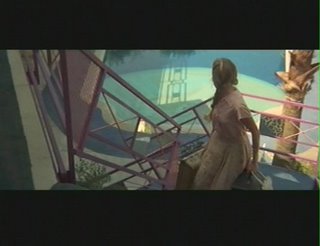
Question in my head is who should be among the thirteen directors asked to do a second series of “Masters of Horror” (and should there be another series)? I got an obvious eye on Crony and Romero. Not so obvious, perhaps, but a shoo-in in my book: Larry Fessenden.


Here's this week's capture:

Hot off the Presses (3.27)

Bill provides the specs on two films I didn't care for: Bee Season and Chicken Little - and I forgot to mention that the 3rd Annual Vail Film Festival has asked me to be on a critics' panel with, among others, Entertainment Weekly's Owen Gleiberman. Good time to ask about his rave of The Dukes of Hazzard?

March 19, 2006

Notes from the Trenches

Spent about an hour with Wim Wenders this week and it was immensely gratifying. Can't guarantee the interview will read as gratifyingly, but I felt as though he and I really hit it off. He told a few interesting Werner Herzog stories (reminding me that I’ll feel complete in a lot of ways in this career should I get to do a long-form interview with the guy) and we talked about his time as an etcher’s apprentice in France during the height of the Cinemateque Francais. I love Wenders’ work, tending to be an apologist even for the pieces that get critically mauled. I never completely understood the hostility towards The End of Violence for instance, and we spent some time talking about Bill Pullman and then his favorite film of last year. Bet you can guess what it was: makes perfect sense if you’re familiar with Wenders’ stuff.

Light screening week – at least it was for me – but I did get a chance to take in the Dardennes Brothers’ The Child and Nicole Holofcenter’s Friends With Money. This week should find me at peeks for the new Spike Lee Joint, Thanks for Smoking and Academy Award-winner Tsotsi, all that contingent on the alleged “record snowfall” that’s supposed to come tonight, holding off or, as is often the case, just never developing.
Look for reviews of the first season of “Grey’s Anatomy” and the second season of “Arrested Development” sooner than later (so long as all these drugs hold out) – the hell of writing on “Grey’s Anatomy” isn’t that it’s a tough nut to crack, but that there are so many extras on there that getting through all of it is a little like touching my tongue to a weasel carcass. I do like to refer to the show now as “Puked a Little in My Mouth: Season One”. My wife wondered why – until she watched one-and-two-thirds episodes.
Speaking of which – our second child is due on April 10, a week ahead of schedule. Just another reason/excuse the writing/screening’s been a little spotty to start off 2006.

Led a discussion post-screening of the Israeli film Yellow Asphalt from a few years ago, directed by some yahoo named Danny Verete. Fair to say that I hate this film in every way that it’s possible to hate a film, and the discussion felt like a thunderstorm with me the lightning rod. It’s tough to do pictures that others program, sometimes; an uncomfortable evening all around. Next month in this series, though, we’re doing Grave of the Fireflies so it all evens out. If you haven’t seen this film, you’ve gotta’. This is also the series that, last year, allowed me to program Takeshi Kitano’s Hana-bi which has become one of my favorite films of all time. Early next month, a deal’s come through for me to do a one-shot with A History of Violence at a smaller library branch. Also working on a deal to do movie-talks at a local Starbucks which, with their partnering with Lion’s Gate this year, could lead to something big. A boy can dream.

“Masters of Horror” is finally coming out on video courtesy Anchor Bay. I can’t help but want to get the whole shebang at once on bootleg off eBay, though. Anyone out there have a Tivo and a willingness to dub off a copy of the entire run? I’d be glad to repay with a couple of promo t-shirts and press kits for stupid movies.

I’m a big fan of Stuart Gordon’s H.P. Lovecraft adaptations in particular. Anyone seen Dagon? Begs the question of great “unknown” films by “known” filmmakers: something like Coppola’s Rain People for instance, or Targets by Bogdanovich.

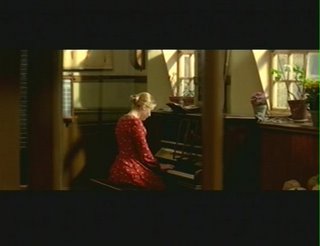
Here’s this week’s capture:

Hot off the Presses (March 19) -

Catch Alex's excellent look at the cult of Shirley Temple in his reviews of Dimples and Mad Hot Ballroom and Bill's review of the great-but-wait-for-the-director's-extended-cut DVD of Peter Jackson's King Kong. Travis, meanwhile, takes on the Jap inanity of Prime and Bill tackles Egoyan's insane Where the Truth Lies. And then there's my not entirely pleasant interview with Robert Towne.

Hot off the Presses (March 21) -

The omnibus review of "Grey's Anatomy" and "Arrested Development", now on-site along with Travis' take on Occupation: Dreamland and Bill's specs on Miyazaki's My Neighbor Totoro.

Hot off the Presses (March 22) -

Travis kicks The Losers right in the shortpants and Bill does the DVD treatment on our latest FFC Must-Own, Noah Baumbach's The Squid and the Whale. I did intervew Mr. Baumbach a few months ago and was sure that he was gonna get a little Oscar lovin' for his screenplay (and Jeff Daniels for his turn) because I, sir, am an idiot.

Screening of Inside Man last night during which some epileptic retard kicked my chair until I threatened to shove it up his ass and, tonight, of Thank You For Smoking during which the smug, self-congratulatory audience for these kinds of films, proceeded to pat themselves on the back for knowing that smoking is bad for you. Sort of made the greater ironies of a picture about manipulation and misdirection just that much more poignant. Throughout, whenever there was any kind of sex scene, some young woman embarrass-shouted "GEEZ!" which made me wonder how it was that someone so very liberal could be so very hung-up about fucking. Geez, indeed.