October 25, 2010

Watch Out Where The Wehrmacht Goes

Good Hallow's Eve, my children of the night, my darling spectres and succubi. Gather close. Closer still. Are you sitting comfortably? Right. Let me tell you a tale, my little sex pumpkins.

Let me tell you what a shitty movie
Dead Snow
is.


This derivative Norwegian lump (
Død Snø) made a stir on the festival scene back in 2009, and its trailers became an online sensation. Nazi zombies! How fun! How new! But I'm pretty convinced "Nazi zombies" was just the incantation that summoned earnest money from investors, who'd never heard of a little gem of Cushingiana called Shock Waves.


Look at that! Not just Nazi zombies, but underwater Nazi zombies. That's amping things up a bit.


I digress. Thing is, Nazi zombies, unless deployed in a correct context, are no scarier or more dangerous than regular zombies. Once risen, all zombies are equal, no matter what they did in life. We know that barricading oneself in a snowbound cabin with an undead horde outside is an untenable position, so does it really matter if the walking corpses are wearing Schutzstaffel armbands, or lederhosen, or nothing at all?

Not unless you're going to take it all the way. What do Nazis do that's bad? Two things come to mind, and since the setting of
Dead Snow is the ass-end of the fjords, we can discard "annexing the Sudetenland." If the trapped protagonists, each just vague silhouettes of slasher-flick victim stereotypes, had some personal or ancestral stake in the matter -- if one or more of them were Jewish, say, or if they were the only ones in a position to repel a Nazi zombie putsch into the population centers -- that makes a difference. If the zombies had some ultimate purpose beyond, apparently, safeguarding the gold they looted during the war and killing any warm human who snowshoes onto their glacier -- that makes a difference. If their undeath spread like disease, as zombiehood usually does, and victims risked being transformed not just into walking corpses but into doctrinaire National Socialists ... you see where I'm going. Real monsters are metaphors, and these monsters are devoid of any meaning deeper than a uniform and a snarl.


The filmmakers would probably rather we not discuss politics, but they brought it up. Nazis are political, and any cinematic impact they carry is rooted in their well-recorded misdeeds. (I mean, they recorded them themselves.) I fear we're moving too far away from that history, so there's no shame in proving Godwin's Law anymore. Dead Snow is like a facet of the Tea Party protests, where fringies decry national health care with reductio ad Hitlerum placards -- for shock value, just to get the cameras turned their way.

Dead Snow's posthumous brownshirts, although acting in an organized military fashion, aren't driven by any racist or nationalist ideology or even a hunger for brains. It's dangerous in that it's so free of real-world reference. Even
Shock Waves had the sense to touch on Nazi medical butchery, to make the gimmick matter. Raiders of the Lost Ark highlighted the Nazis' territorial aggression and racial doctrine, and then meted out God's incinerating justice.

Halloween movie fests are a tradition. It's fun to select a stack of flicks for your party or sleepover and indulge in a case of the creeps, or the titters. Dead Snow is available on Netflix Instant Watch. Avoid it. Don't rent the disc, don't torrent the stream. I don't care how much you love ScandiHorror -- this is not Let the Right One In. As horror spoofs go, this is not even Shaun of the Dead and it's a hell of a long way from Evil Dead 2. It's just a waste.

Okay, I misspeak -- there's
one good kill. One! A Nazi zombie hooks his fingers into a fat guy's eye sockets and pulls until his skull splits and his still-living brain flomphs out on the cabin floor. That's ... pretty awesome. But it's just a garnish on a bucket of vacuous bilge, something that's hollow and desperate at best and, at worst, subtly corrosive to the untutored conscience.

You know what else is on Netflix Instant? Shock Waves.
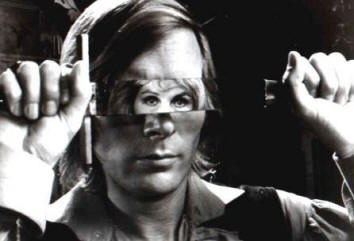

To end on a positive note: I'd love to know the fright films, if any, that find their way to your home screen around Halloween time. My touchstones are the Stuart Gordon's Re-Animator and From Beyond, the first Alien, and select Hammer fare including, but not limited to, Captain Kronos: Vampire Hunter. Please share in comments ... and Happy Halloween, my tumescent sin biscuits.

October 17, 2010

Goodnight, June

Though I always have "Leave it to Beaver" on the brain, I was thinking about Barbara "June Cleaver" Billingsley specifically just the other day, thinking about how the only thing that convinced me to watch the Muppets in cartoon form, which seemed vaguely sacreligious--and cheap--at the time (circa 1985), was that Billingsley provided the voice of Nanny. The show of course was "Muppet Babies", and while I recall very little of it at this point, I can still hear Billingsley interrupting the opening theme to ask, "Is everything all right in here?" It tickled me then and tickles me now that two of my most (if not the two most) formative amusements intersect in some fashion.

Like her "Beaver" co-star Hugh Beaumont, Billingsley, born Barbara Combes in 1915, drifted back and forth between uncredited parts in film (Invaders from Mars) and bigger showcases on TV series that didn't last ("Professional Father", "The Brothers") before landing the role that would make her an icon. Just what kind of icon is, I guess, up for debate--today there's a tendency to look down on June Cleaver, but I look up, at this towering domestic goddess, whom Billingsley played with warmth, dignity, great humour, and a poignant dash of anxiety. She did housework in pearls, but context is everything: Ward wore a suit to the dinner table.

"Leave it to Beaver" was not actually a hit in first run, and Billingsley quietly retreated from showbiz after the series ended in 1963. (Fittingly, in June.) But syndication had an effect on the show similar to the one it had on "Star Trek"; by 1980, Billingsley was being sought out by the makers of Airplane! for a cameo that traded on the incongruity of the erstwhile Mrs. Cleaver speaking ebonics. She never looked back. Over the next two decades, Billingsley would alternate mild subversions of her alter ego with a resurrection of the real McCoy in the TV movie Still the Beaver and its sitcom spin-off. By the time they made "Leave It to Beaver" into a feature film in the television-adaptation-happy '90s, she was old enough to play stodgy Aunt Martha, but she was nonetheless woefully miscast. Too lovely. Too hip.

Barbara Billingsley died yesterday at 94. But she lives on.

From the first great episode of "Leave it to Beaver", season one's "The Haircut." June's reaction to Beaver's haircut is priceless--talk about an underrated comedienne:


Billingsley's infamous "I Speak Jive" scene from Airplane!:

October 10, 2010

Requiescat In Genre


From the New York Times, Oct. 8:
Roy Ward Baker, an undersung British filmmaker who directed “A Night to Remember,” a vivid black-and-white rendering of the sinking of the Titanic revered by history and movie buffs alike, died on Tuesday in London. He was 93.
Thirteen paragraphs later:
When he returned to feature films, it was largely to work for Hammer, the British studio most associated with horror films. His movies in that period included “The Vampire Lovers” (1970), a tale of revenge and bloodlust that was especially notable for its two nude scenes; and “Dr. Jekyll and Sister Hyde” (1971), a campy adaptation of the Robert Louis Stevenson classic that adds a soupçon of erotic intrigue by making the good doctor’s evil alter ego a woman.
Let me pose this question: Who the fuck remembers A Night To Remember? It's thoroughly occluded in popular recall by every shipwreck-disaster flick to arise from The Poseidon Adventure on. And really, who gives a shit about the sinking of the Titanic when you could be looking at these? (NSFW.)


I'm saying this hyperbolically, not to argue that Baker's near-documentary accomplishments in A Night To Remember pale next to a few bared knockers. What I'm saying is that Baker's B-pictures have achieved a life well beyond his mainstream work, yet his obituarists felt compelled to log them almost as footnotes, not as part of his respectable portfolio.
American journalism -- unless it's specialized, unless there's some unforeseen eruption into the popular culture (Twilight, Harry Potter), or unless a star reporter chooses to go slumming -- has a notoriously tin ear for genre art. There's a received wisdom about what's important, and that wisdom often overlooks the obvious. Like, say, the fact that Quatermass and the Pit (1967) is still screened, discussed, and even worshipped in a way that Tiger In the Smoke (1956) never was. In the battle to write the obit's lede, the Golden Globe winner tops the midnight movie favorite anyday, and those episodes of "The Avengers" and "The Saint" are carrion for crows.


I noticed this tendency to obscure the genre triumphs of deceased luminaries after Patricia Neal died back in August. From the Los Angeles Times:
"Three Secrets" (1950), "Operation Pacific" (1951), "Raton Pass" (1951), "The Day the Earth Stood Still" (1951), "Diplomatic Courier" (1952) and "Something for the Birds" (1952) were hardly films to make her a memorable star.
Well, sniffy sniff sniff. Neal's posthumous plaudits were for her outstanding dramatic performances, deservedly, and for her astonishing victory over family trauma and near-fatal brain afflictions; the overall arc of her life is amazing. But I'd wager more people now have seen The Day the Earth Stood Still, and been more deeply affected by it, than have ever seen Hud. The classics of science fiction and fantasy are not ghettoized the way we were brought up to believe, and haven't been for a long time — at least since the B-movies became A-list in the late '70s, and the whole world starting flocking to sharksploitation flicks and space adventures.
Steven Spielberg has Oscars now, although he had to all but abandon science fiction to win them. When his obit gets written, which paragraph will pay tribute to Raiders of the Lost Ark?

October 04, 2010

Make Room! Make Room!


"You are tearing me apart, Lisa!"

Last week, I saw The Room for the first time. I had been aware of its dodgy reputation for a long while--friends in
Hollywood had told me about the perplexing billboard that stood there for a good five years, as well as the various midnight screenings that took place around the Los Angeles area--but there were two roughly concurrent assessments of the film that finally prompted me to sit down and watch it. The first was Newgrounds' "The Room Tribute", a Flash game that recreates the events of the movie as a 16-bit RPG. The other was Alex Jackson's brief paragraph in a comment on the FFC Blog: "Speaking as a 'bad movie' buff, I actually hated it. Made me feel like it would be cruel to laugh. The content is just not abstract enough to benefit from Wiseau's ineptness." Whether it was bad or merely "bad," this was something that I needed to have in my life. Now, I'm hardly an authority on bad movies, but it's always fun to hunt down the most infamous titles and find out how you react. Sometimes you laugh, sometimes you cringe, and sometimes you find something worthy of honest appreciation. One of the biggest surprises was Phil Tucker's Robot Monster, which was so many kinds of fucked-up that, deep down, it seems somewhat aware of its own ridiculousness; not blinded by Ed Wood's giddy appreciation for cinema, but a story that needed to be told nonetheless. It was only a matter of time before I got around to The Room, but I can't remember the last time I reacted so violently to a "good" bad movie.

The follies of The Room are well-documented: characters repeat the same lines with bizarre regularity; subplots involving breast cancer and a violent drug dealer are forgotten almost as soon as they're introduced; character motivations seem to change mid-sentence. I have to disagree with Alex on one major point--it would be cruel to laugh, but only because the movie is impossible to comprehend. A man, Johnny (actor/writer/director/producer Tommy Wiseau (he gives himself a title card for each role)), his "future wife" Lisa (Juliette Danielle), his "best friend" Mark (Greg Sestero) and his surrogate son Denny (Philip Haldiman)... it's true that the film's attempts at narrative are meager and straightforward (woman cheats on her fiancé with his best friend), but the execution goes beyond the pale. No matter how "good" The Room was supposed to be, or how much entertainment value it could provide as a "bad" film, I had no idea what I was watching. The film assumes that we know the characters more intimately than we actually do--did the final cut accidentally leave out a reel? The image looks a little out of place, a little too hazy, for something released in 2003--was it shot in 1987? The first half-hour alone features three sex scenes with the same woman, complete with some repetitive R&B--did Wiseau start out with a porno and fail spectacularly? Why do these people spend so much time playing catch with a football? Why do they fall down so often? Why? Why? Why?


Now, I haven't seen Best Worst Movie, so I can't say whether or not that film provides insight into the phenomenon of "so bad it's good." I have, however, seen Troll 2, the film whose fan base it documents. The dialogue is improbable and the leaps in logic are simply too far to make, but I don't recall ever being bewildered by the structure of it, exactly. It always feels broken beyond repair, but never outright dismantled. I laughed at Troll 2, but The Room's most inexplicable moments are lobbed at the viewer with such aggression that my first instinct was to curl up into a fetal position. The very least of these moments burrowed deep under my skin: when characters call each other "chicken," they don't cluck, they cheep--and Wiseau cheep-cheep-cheeps so many times throughout the movie that I began to wonder if he was making fun of me. Yes, watching The Room confused me, frightened me, and made me just a little paranoid. It's as if there was a joke, and I wasn't sure who was playing it, or whom the intended target was. Wiseau is a somewhat terrifying figure in his own right. He's a mysterious character whose background is fuzzy at best, with an accent that's impossible to place. How did he finance this thing? Again, the details are vague. Wiseau apparently wants to maintain some control over his image. (A one-sided "interview" with the director on the Room DVD also suffers from the movie's most glaring technical flaw--several lines from Wiseau's pre-chewed lectures have been looped in ADR.) But one thing's been bothering me ever since I met The Room with wide-eyed incredulity. If it's so unfathomable and the artistic failure is so complete--and, furthermore, if I can't laugh at it--why can't I regard Wiseau with the same sympathetic eye that I offered the fictional Joaquin Phoenix of I'm Still Here? "They don’t understand The Room was done intentionally to provoke the audience," Wiseau once told LAist, and that was certainly the impetus behind Phoenix's act. But while The Room certainly provoked me, I never actually believed that it did so intentionally. I feel that, if Wiseau ever tried to tell us that his escapades were a hoax, I would ferociously reject that claim. Why? If I embrace the fake clown but deride the real clown, doesn't that make me just as ignorant as Hollywood's condescending Oscar mill?


"I'll go off and beat off and you can lick the seat off. Later, muchacho."

Part of the problem has to be that Wiseau is difficult to pin down in terms of precedent. In fact, the closest approximation to
The Room that I can imagine is a parody of bad cinema. More specifically, a collection of cartoons produced by Something Awful in 2008--the saga of Peezle Ward. What began as an April Fool's Day joke eventually blossomed into a full-blown series about a fictional hack writer who has penned "more than 10 but less than a billion short stories." By "adapting" Ward's scripts in a brusque monotone, Dave Kelly and Josh Jones attempt to understand artists like Wiseau and pick apart the reasons for their failure. The first few episodes (Lawyer Street, Escape from Satan's Ass) establish Ward as obsessed with very important issues without knowing how to approach them: "I know rape is a very sensitive subject, but I believe I handled it very tastefully. It changes Frank forever. In the end, he believes in God. That's called character development. The self-rape was an analogy for time travel; I call it quantum rape." The rest of them (Ghost Unit, Fire Killers, Brave Aeronauts and Christmas in Essex) revolve around one all-conquering hero whose professional brilliance excuses his personality: "That black family thanked me for saving their lives. They didn't care that I had to hack up a dog to do it. May I remind you, officer, it was a black family."

Of course, it takes zero effort to link a dearth of talent to an enormous ego. But the Peezle Ward series tackles the very basic components of The Room by forcing its characters to spout exposition in long strings of static dialogue. More fascinating, and more important to this conversation, is how that dialogue is comprised almost entirely of circuitous insults from the author's surrogate/Mary Sue, Pete (or Tim, or Pip). The profane stream of consciousness mirrors Wiseau's belligerent direction quite well, and by the end of each cartoon you understand Ward as a terrible writer, a screaming misogynist, and utterly self-absorbed... and then you anxiously click over to the next installment, unable to look away. How will Pete stick it to his superiors this time? How will he (improbably) save the day? It makes just enough sense to force you into wondering where it's all coming from, and where it's all going. The series is a great satire because it's completely engulfed by the original source(s)--and if it doesn't completely decipher films like The Room, it explains their allure all too well.


"The Room Tribute" finally puts the rest of the pieces together. The player takes on the role of Johnny, and the game is presented exclusively from his point of view as he wanders in and out of the story proper. Plot holes are filled where necessary--the player has to take drug dealer Chris-R to the police, and we're there when Johnny learns that Lisa has accused him of domestic abuse--but most everything else is taken verbatim from the movie. (It even faithfully recreates the plodding soundtrack in chiptune.) An inventory and a turn-based battle system nominally make it a video game, but these conceits don't actually add up to a challenge. Collect spoons! Make sandwiches! Catch the ball! Throw the ball! Push your best friend! It's more about reacting to the silly plot than anything else. Johnny starts off with some six million dollars, and he never spends more than two hundred--not including the $50,000 used to pay Denny's college tuition in a single, negligible instant. So how can he possibly complain about an elusive promotion at the bank? By utilizing, and then ignoring, the interactivity inherent to the medium, "The Room Tribute" engages a conversation with the player/viewer about how Wiseau ignores nearly everything necessary to create dramatic tension.

"The Room Tribute" succeeds so well not just because it highlights the oddities of The Room, but because it acts as an interpreter of sorts. Now, the game cannot make sense out of the movie, per se. The new dialogue stands so far apart from the recreations of Wiseau's script that it cannot dilute the wackiness of the original work.
Rather, it presents The Room as a supernatural dreamworld. An earthquake cuts the characters off from the rest of San Francisco, defining the playing field in a move reminiscent of "It's a Good Life." Levels are divided into days, and most of them begin with a sequence inspired by the ending of "Super Mario Bros. 2". Every store in the four-block area is operated by the same woman (the owner of the flower shop in the movie), who always makes it a point to mention that Johnny is her "favorite customer."

The game goes to great lengths to demonstrate that Johnny is everyone's favorite--the banker's favorite employee, the cops' favorite citizen, San Francisco's favorite donator. To drive the point home, it's soon revealed that Johnny's big, "confidential" client at the bank is none other than Tommy Wiseau himself. Despite the fact that it sees the movie as beyond all reasonable logic, "The Room Tribute" knows that if it operates within a dreamworld, it must be Wiseau's dream. Again, that's hardly a revelation, but what the game does is isolate Wiseau's ego and labels it as the lone source of all that wackiness. The conclusion is that The Room isn't bad because of the stilted dialogue--it's bad because Wiseau has so little respect for the cast, the medium and the viewer. At the end of "The Room Tribute", the player can either act out the climax of the movie with Johnny, or lead him outside first. In the latter scenario, he will take his anger out
on the various people who have wronged him throughout the week. As he says in the film, "Everyone betrayed me; I'm fed up with this world." Tommy/Johnny is the hero of the story, the saint and the martyr, and that's all the more obvious when he becomes a video game protagonist from the late '80s/early '90s... one who barely does anything to deserve canonization.


What all of that means is that by "interpreting" The Room, "The Room Tribute" also cuts through the bullshit that makes it so difficult to approach. In the final analysis, what's so hard to grasp about an act of transparent narcissism? Portaying him as strange, artless, and not of this Earth, the game does see Wiseau is a provocateur, but not in any way that matters. "Joaquin Phoenix" was a passive character until we responded negatively to his public antics, and from there he revealed our prejudices about art and movie stars. With this big film about big important things ("do you understand life?"), Wiseau came out swinging, demanding our accolades right from the start, like a spoiled child. His artistic aggressiveness comes not from the inanity of his work, but from his self-satisfaction, and weirdness aside, that just makes The Room a run-of-the-mill bad movie. He prodded his audience, and contrary to his later claims, I don't think he ever expected them to prod back. True to his ego, he took in all in stride and grabbed all the attention he could get. The joke that drives "The Room Tribute" (ostensibly another outlet for Wiseau to exploit) is that it's the only tribute that The Room could possibly warrant. I laughed--and it was a catharsis that I desperately needed.

A subsequent viewing of The Room held no additional surprises for me--indeed, despite having a grand old time playing "The Room Tribute", I didn't take much joy from watching the moments that I now recognized as cult iconography. The veil of nonsense had been lifted, and the husk that remained just bored me stupid. I can't say anything for the midnight showings--they might be fun, after all--but they've given Wiseau license to peddle this film as an intentional comedy. No one actually believes him, but it's the mystique of the ultimate bad movie that keeps it alive, and that's far more than what the real movie deserves.

September 27, 2010

TIFF 2010: Wrap It Up

  • The films are fading fast in the rearview for me (no reflection on them, necessarily), but before they become too vestigial I want to at least highlight the rest of what I saw at this year's TIFF, starting with a movie called White Irish Drinkers. How I wound up catching this flick is fairly embarrassing: the director is "John Gray," which I misread in my bleary, end-of-festival state as "James Gray." I was severely late for the flick, so I don't want to pummel it (or even officially rate it), but keen auteurist that I am, I figured out my mistake pretty quickly: James Gray just wouldn't have a naked girl (the maddeningly familiar Leslie Murphy) run around a cemetery with "free spirit" music cued up on the soundtrack--he's not a de facto film student anymore. Though it turns out that John Gray has an extensive TV-movie resume, having done everything from The Marla Hanson Story to the remake of Brian's Song, this feels very much the work of a novice, not a little for its pretensions to be the next Mean Streets. Because Stephen Lang salvaged Public Enemies virtually single-handedly, I was hopeful when he turned up here, but his character may be even more one-note than the one he played in Avatar. As his put-upon wife, Karen Allen has seemingly recovered from the stupefying euphoria of getting to resurrect her iconic Marion in Kingdom of the Crystal Skull. Strangely, I missed said goofy grin, yet she makes the most of a thankless role that indirectly references her previous brush with this genre, Philip Kaufman's The Wanderers. The rest of the cast is made up of baby-faced thugs who have to be given black eyes at regular intervals in order to pass for tough. On a related note, I never could shake the feeling that this is exactly the sort of project Vinnie Chase would be hot for on "Entourage".
  • If the effusive headlines at AICN are any indication, the geeks were born to love James Gunn's fast, cheap, and out-of-control Super (**/****). I wasn't exactly indifferent, but I'm definitely burned out on these pomo comic-book movies. Aggravating the picture's been there/done that feeling is its pronounced debt to Taxi Driver, which Super rehashes with selective realism and a much greater emphasis on shock value. It also has a Troma patina--which is probably a hard thing for Gunn, who cut his teeth on stuff like Tromeo and Juliet, to shake--that makes the all-star cast look like they're participating in a telethon, although Ellen Page overcomes this obstacle to deliver another performance for the ages. As the ferocious sidekick to Rainn Wilson's homemade superhero the Crimson Bolt, she resists every impulse towards good taste and forces audiences to start recognizing her as a) an adult woman and b) a sexual being by modeling her skin-tight spandex costume as indecently as possible. Still, the film is so glib and so arch that I kind of resented its presumptuous detours into sentiment and tragedy.
  • I don't show my appreciation for Bruce Springsteen--an evergreen artist if ever there was one--often enough, thus in a way going to see The Promise: The Making of "Darkness on the Edge of Town" (**½/****) was a form of penance. But I confess I had an ulterior motive, which was to set foot inside Toronto's new state-of-the-art cinema complex the Bell Lightbox. It's beautiful. Huge, too. My visit was basically a hit-and-run, but I did of course get to audit one of the five spacious screening rooms, with its impressive corridors and seventies-brown, perhaps quintessentially Canadian interior. (The lobby is a mix of cool blues and modernist whites.) As for the Bruce doc, a quasi-sequel to Wings for Wheels: The Making of "Born to Run", it's a pleasant mix of fly-on-the-wall footage of the original recording sessions for the titular album and retrospective interviews with the E Street Band as well as various industry types. You've got to admire Springsteen's chutzpah in documenting and cataloguing his creative process with a borderline-Kubrickian obsessiveness long before his reputation warranted it, but as much as his collaborators bitch about his anal-retentiveness from their current vantage, he's such a benign genius that the studio material frankly doesn't generate a lot of electricity--at least between jams. Moreover, so much of it is presumed to need contextualization by the latter-day interviews that I grew restless with the constant cutting back and forth.
  • I don't know what to say, really, about Canadian Carl Bessai's Repeaters (*/****) or Ji-woon Kim's I Saw the Devil (**/****). Bessai has flirted with sci-fi tropes before but he's wading pretty deep into the genre pool with this indie riff on Groundhog Day, in which three rehab residents take the place of one weatherman. While these 12-steppers are more obviously inclined to seek redemption in do-overs than Bill Murray was, they might as well still be TV meteorologists: given that they cheerfully relapse upon realizing tomorrow now comes with a clean slate, it's a cheat that they're able to control and even forget their addictions once some semblance of a plot kicks in. The '80s-horror-movie coda doesn't help matters. The premise of I Saw the Devil, another film instantly enshrined by the geek cult, is that a serial killer locks horns with a Korean secret service agent, who uses every tool at his disposal to track his wife's murderer and thwart the bastard's attempts to claim another victim, thereby giving him a terminal case of blue balls. It's a potentially exasperating conceit rendered all the more so by the execution: the picture's too long, too repetitive, and neither stylish nor meta enough to get away with lazily-plotted scenes like the one where the presumed-unconscious killer overhears a crucial bit of information. I write this as a fan of Kim's A Tale of Two Sisters and his Leone pastiche The Good the Bad and the Weird.
  • Let's go out on a high note, with Eric Lartigau's The Big Picture (L'homme qui voulait vivre sa vie) (***½/****). (The literal translation of the French title is considerably more loaded: "The Man Who Wanted to Live His Life.") I actually don't want to spoil this one with a plot synopsis, because I can't discount the sheer pleasure I got from its constant gear-shifting. (This year's TIFF taught me that I'm learning to appreciate a good yarn well told.) Suffice it to say, the first act filled me with dread that this was going to be another film that sets out to punish the workaholic patriarch, only in French (it's in fact based on an American novel by Douglas Kennedy), but the picture soon flies off in a different direction, and then it soars--a draggy section of pipe-laying in the middle notwithstanding. What I love is its moral ambivalence, its neutrality: Romain Duris's Paul Exben isn't a bad guy, he just does bad things; and somehow, his acts of atonement are even worse, yet there is a certain consolation in that he's following his muse. We observe him with interest if not attachment. A literate epic,The Big Picture waxes poetic on everything from the nature of identity to the virtues of digital vs. analog (both reveal their boundaries in Paul's transition from one world to the other), to photography, to fame, to globalism... And let it not go unsaid that A Prophet's Niels Arestrup and Public Enemies' Branka Katic are absolutely lovely in pivotal roles that leave a little hole in the air when the movie's over.

Fuck.

Looks like we're gonna have to switch to comment moderation, at least for the time being. These fucking spammers--they ruin it for everybody.

Working on a TIFF wrap-up and there's lots of other cool stuff coming up, so stay tuned. Please don't be scared off by the comments approval; our standards will be as lax as always.

September 20, 2010

Boardwalk Empire Talkback

My two biggest issues with the show were evident in the ads though after last night's pilot I'm not really sure they are issues exactly.

1. Steve Buscemi is no James Gandolfini and he is no Jon Hamm. I like Buscemi and his directorial debut Trees Lounge, which he is in roughly eighty percent of the time, is easily one of the five best films of 1996. But he seems too broad and uncharismatic to carry an entire television series. (I find his henchman, played by Michael Pitt, considerably more interesting). Then again, I suspect that you could argue that Nucky Thompson isn't Tony Soprano and he isn't Don Draper. The line between politician and gangster is much more diffuse than in something like "The Sopranos". In fact, it might be something that we haven't seen before. I suspect the problem isn't that Buscemi is all wrong, but that he's just giving us something brand new.

2. Set in 1920, the show is a work of science fiction. Highlighted by a sideshow showing off incubators for premature babies and a strangely unfunny vaudville routine, the show has relatively few reference points to guide us through. I was so busy absorbing the alien culture that I found myself missing a lot of signficant plot points. Again, it might not be that it's wrong it might just be that's brand new.

Your thoughts though?