January 17, 2006

Ch. . Ch. .. Chaaaain

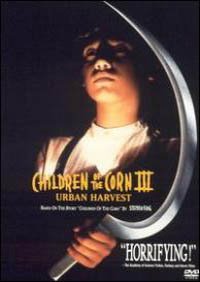
I went out and got the three Texas Chainsaw Massacre sequels (not remake) just to try to get a handle on where each of ‘em were coming from. I’ve done this kind of thing before in the past with all the Hellraiser sequels (at that time, just five, I think – two more since?) and all the Children of the Corn sequels (five, too, at that time, up to six now, I think), often to find that there were great moments buried in them if not great films. Children of the Corn 3: Urban Harvest, with F/X work by the great Screaming Mad George, being both a great film and possessed of great moments. Some of the most excellently gruesome karo syrup and puppet gore since Carpenter’s The Thing, not the least of its attractions.

I was surprised to be reminded that Tobe Hooper, after something of a mid-career trainwreck (the trouble with Poltergeist, and then there was Lifeforce. What the fuck was that all about?), had returned in 1986 to helm the sequel to his own seminal Texas Chain Saw Massacre - and that Dennis Hopper, in his annus mirabulus, had turned in another button-down psycho performance, unappreciated at the time, that should at least be afforded a quasi-serious re-examination. What I was most surprised to find, however, is a setpiece early on with Leatherface (Bill Johnson this time. Like Gidget, there was different actor playing “Leather” each time) menacing a pair of yuppie scum from the back of a speeding pick-up (a corpse strapped to his chest as literal body armor) that is just unspeakably cool. (Augmented of course, thanks Ian, by the freaking insane use of Oingo Boingo on the soundtrack.)
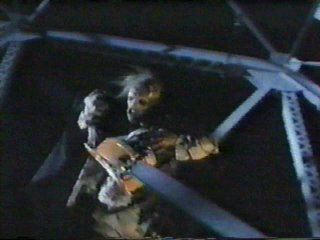
The decision, derided at the time, of Hooper’s to follow his intensely serious original with a freaked-out sideshow, is easier to appreciate now, I think, with the revisionist praise heaped upon Raimi’s Evil Dead pictures, Jackson’s own Dead films (Dead Alive, Brain Dead), as well as the ‘90s cycle of post-modern slashers – then it was in the mid-eighties when horror was, by and large, serious about its exploitation. Not to say that TCM 2 isn’t gory – it’s legendarily gory with effects work by Tom Savini that has as its highlight a skinned hillbilly, animate enough to mutter “ah, shit” before shuffling off to his great reward – just to say that the mixture of copious amounts of gore with a lot of meta-irony was of a different coin then.

I sense a lot of resignation and mordant self-deprecation in TCM 2 in Hoopers reduction of what had already become a legendary monster in the horror pantheon to a chili magnate and a hyper-sexualized, but impotent, man-child. The thrusting of hips accompanying the chainsaw’s growls the first hint – but the best when he dunks his “member” in a barrel of ice, is unable to start it again against a pretty girl’s thigh, before being “re-invigorated” by her reassurances. Yeah, there’s a tentative love story in TCM 2, and there’s also a chainsaw duel between Hopper’s psycho Texas Ranger and Leatherface himself atop that infamous banquet table.

The key to the series can be found in the quality of the bogey’s skin mask; of how as the series progresses, the excellence of craftsmanship afforded to Leatherface’s other trademark affectation works in conspicuous inverse proportion to the quality of the film. In the original TCM, Leatherface’s mask is a skin bag with eyeholes and hair. By the second film, the mask fits pretty well and sports motley coloration, and by the third, it’s form-fitted and sleek. By the time of its third sequel, Return of the Texas Chainsaw Massacre, though, the mask is a hood, including chest, that appears to have been removed without any kind of trauma from what must have been a humongous woman. It has the effect of making this demon of the id, utterly castrated by this point, into something like an unflattering caricature of a squealing, quailing transvestite.


Imagine Jason Vorhees upgrading his hockey mask, film by film, until he’s sporting one of those space-age football-helmet-y things that they wear in the crease nowadays. Now make him a pansy. Though the remake of TCM (a remake that I liked) lacks a lot of the raw brutality and nihilism of the original, it at least doesn’t make Leatherface pathetic and, more, returns his “look” to that of what a giant “developmentally arrested” cannibal with an old Singer could probably fashion out of the pelts of his victims.

Leatherface: TCM 3 (1990) is the one with Viggo Mortensen as a cannibal named “Tex”. It’s also the one with the evil little girl in the room full of children’s bones who drops a sledgehammer on one of our yuppie scum victims – the one where the scream queen is the inflection-less Kate Hodge who not only looks like Nightmare on Elm Street scream queen Heather Langenkamp, but, lamentably, acts like her, too. A legendarily troubled production, director Jeff Burr (not a good director already and fresh off the horrible Stepfather II), already not a good director, was forced to fatally trim the film down for an “R” rating (this in the middle of a “squeamish,” reactionary period in American horror) and to resurrect a hero (Ken Foree) for a “happy” ending who had clearly had this head rendered in twain by a giant, chrome chainsaw.

If not for Mortensen (a precurser to his "Joey" persona in A History of Violence) and that brief look into an evil little girl’s evil little room, TCM 3 would be a complete disaster instead of the near-complete disaster that it is. Leatherface is infantilized instead of enfant terrible, and watching the uncut version available on the DVD serves mostly to underscore just how useless and out-of-touch the MPAA has always been. There’s hardly any gore in this thing at all. Unlike Return of the Texas Chainsaw Massacre (TCM 4), which showcases standout performances by Matthew McConaughey as a bionic hillbilly and Renee Zellweger (and what is her superpower but that ineffable aura of "please don't hit me"?) in what might still be her best, most vulnerable performance as the requisite last-girl standing.

The first half hour is just fantastic, feeling every bit a member of the Prom Night cycle, as a quartet of promsters (including Zellweger’s geeky Jenny) get lost in the woods, accosted by psycho-tow truck driver Vilmer (McConaughey), and trapped in the Sawyer clan’s farmhouse. But then, Leatherface (Robert Jacks), finds himself easily cowed with a small prod and a harsh word, the family doesn’t appear to be cannibalistic anymore, and the whole thing is imagined as some kind of government conspiracy. Co-writer on the original, Kim Henkel, takes the blame for this bathetic turgid-piece which, while featuring some humor now and again and, I mean it, a tremendous turn by Zellweger, is submarined without hope of salvation by a final ten minute stretch so ridiculous and self-indulgent that you can feel the universe slowly turning itself inside-out.

What’s fascinating is that all four original TCM pictures sport virtuoso performances. Gunnar Hansen in the original, then Hopper, Mortensen, and Zellweger/McConaughey (and someone, not me, should do an essay on the role of technology in these pictures – especially the bionic legs of Leatherface in pt. 3 and Vilmer in pt. 4 – something going on there…). Each of the sequels (well, maybe not the third), too, has at least a scene worth a Netflix rental. In the case of two, a genuinely good film, and four – more than one scene.

TCM 2 - ***/****
TCM 3 - 1/2*/****
TCM 4 - *1/2/****

In not an entirely unrelated topic, the Hollywood Foreign Press gave out their bally-hooed Oscar bellweathers last night. The HFP, by the way, is fiftyish Danish women who write for the exact equivalent of those Penny Savers that you pick up for free at the grocery store. We're not talking here about the critics for the London Times or Cahiers du Cinema - we're talking about a fan-based group that created themselves so that celebrities would come to a party they threw to collect a prize that they conjured and, somehow, made prestigious. It's fan/junket/star symbiosis: a parasitic relationship that seems to have taken.

That in mind, the parade of winners exactly identifies the kind of mediocrity favored by the almost-6,000 member Academy: glossy, safe, political choices. The preponderance of "alternative lifestyle" wins suggests to me not the dawning of a new age of tolerance, but the idea that gay is the new favored disability. Was it someone in this blog that said that it's the new "retarded"? Whoever it was: bravo. I think you're right dead on the mark.

"I like queers; I paid cash-money to see Brokeback Mountain."

They should've passed out little stickers in the lobby like they do at the blood banks.

BEST PICTURE: DRAMA
Brokeback Mountain

BEST PICTURE: NOT-DRAMA
Walk the Line (indeed un-dramatic)

BEST ACTOR: DRAMA
Philip Seymour Hoffman - Capote

BEST ACTRESS: DRAMA
Felicity Huffman - Transamerica

BEST ACTOR: NOT-DRAMA
Joaquin Phoenix - Walk the Line

BEST ACTRESS: NOT-DRAMA
Resse Witherspoon - Walk the Line

BEST SUPPORTING ACTOR
George Clooney - Syriana

BEST SUPPORTING ACTRESS
Rachel Weisz - Constant Gardener

BEST DIRECTOR
Ang Lee - Brokeback Mountain

BEST SCREENPLAY
Brokeback Mountain

BEST SONG
"A Love That Will Never Grow Old" - Brokeback Mountain

BEST SCORE
Memoirs of a Geisha

BEST FOREIGN
Paradise Now

Also - Sandra Oh, the angriest woman on the planet, won an award. 'nuff said.

Back at the mothersite, Alex takes a little off the top of The Scalphunters and Bill offers a few words on that steaming pile of shitska: Pretty Persuasion.

Hot off the Presses (January 19, 2006):

Here's the review of Malick's uncut The New World - haven't seen the new one, 16min shorter, I've heard. Also reviews of Albert Brooks' disappointing Looking for Comedy in the Muslim World and Eugene Jarecki's similarly disappointing (but more jingoistic) Why We Fight. Travis, meanwhile, goes after Pacino in Two for the Money while we resume Mr. Hoover's quest to find comedy in the Jerry Lewis world in the Disorderly Orderly. ToynLAYbin!

January 16, 2006

Notes from the Trenches

Back on the horse with public screenings of Glory Road, Last Holiday, and Tristan & Isolde. Seat-kicker in the last one, raucous cheering in the first two, and sort of a general sense that things are only as they always have always been with the fresh offerings for any New Year – that it’s an act of extreme optimism to think that things will change after just one down year at the box office (one already equivocated to death by pundits to the point that there’s not a point anymore) – so the question of whether any portion of the status quo has been shaken by Michael Bay’s first non-blockbuster sort of lies there pathetic in the weak light of too much proximity. We’ll know more in a couple of years if we get there.

Netflix is a generous mistress, though, offering all three Texas Chainsaw Massacre sequels in one glorious red-envelope (Asian-friendly!) fan in my mailbox this week. Ah so, as they say, and so I’ll blog ‘em in the next couple of days. Also watched Kenji Mizoguchi’s beautiful Ugetsu, Brian DePalma getting all mutie on our asses with The Fury, and Anne Hathaway in all her topless glory (ditto Bijou Phillips, but that’s so 2001) in the genuinely dreadful wigger morality play, Havoc.


Mid-week, I sat down with the radiant Natasha Richardson for a nice chat about legacies of film and family: her voice is Kathleen Turner-smoky and her bearing is regal and self-confident. She had interesting things to say about Woody’s Match Point. Her husband, Liam Neeson, was in-state at the same time as she was, but hours away in the mountains, doing a little wilderness retreat under the radar, as it were. He’s excellent in Breakfast on Pluto.

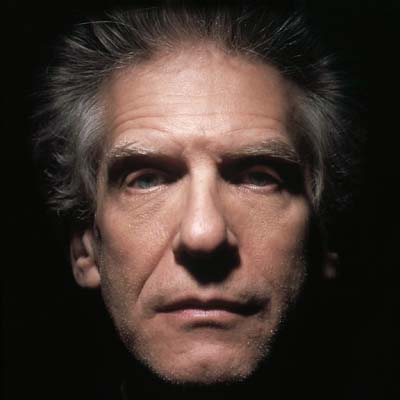
Traveled ninety minutes into the mountains to an elevation of about 8,200 ft. to moderate non-profit Vail Symposium’s David Cronenberg mini-festival, screening Dead Ringers and Spider on Friday and a pristine 35mm print of A History of Violence as the closer on Saturday. The resonances of the first two films on the third are varied and obvious, not the least of which the actors playing multiple roles (and fascinating to trace the nature of that duality through the three films from literal to existential to societal). This my fourth look at A History of Violence and the assembled audience still pointed out things for me to chew on. The best of which the frozen clock tower in the middle of Millbrook, and the idea that all the citizens therein are complicit in the illusion of a Rockwellian amber – one disturbed first by the appearance of the real bad guys before the suddenly chastened schoolyard bullies who are, after all, just playing out roles that they’ve agreed, with that society, to enact into eternity.

Echoes of Vonnegut’s Timequake: shot back in time and forced to relive the last couple of decades, powerless to change a thing, and eventually – as Kirkegaard theorized once upon a time – getting really comfortable with that tacit acceptance of re-enacting a known past we can never change. If you see Cronenberg as an alien anthropologist (and many did, some noting the “E” and “T” decorative cubes on a shelf in the Stall household: “Edie” and “Tom”, of course, but there you have it), dealing in this film with a collection of genre clichés and techniques to expose the lizard brain squatting in the middle of every person’s better intentions - History might be his most mechanized picture. Cronenberg’s Modern Times. It gets better, like all of his work, every time you see it. By the second time through, already, History feels like it’s half the length of the first time – the apprehension of the first trip replaced by the exhilaration of its unerringly sure hand in subsequent passes.
There’s nothing more rewarding than unraveling the concerns and techniques of a brilliant director with a group of smart, courageous people, who know enough about the possibility of the movies to eschew all the other entertainment options available to them up there – and to immerse themselves in three of Cronenberg’s late masterpieces. It’s not an easy ride, and I’ve got nothing but admiration and gratefulness for their participation. Highlight of a fantastic couple of nights at the movies? The director of the Vilar Center, the beautiful venue where we show the films, asked me “what’s next?” Bless his heart, I think I already know.

If you haven’t read them, here are our two interviews with Mr. C. One. And, two.

Appeared on a local Comcast television show live to talk about Cronenberg and being a film critic in the ’06 on Saturday morning. Went well, so I’m told.

And speaking of The Brood, Brangelina is pregnant. I mention this not because it’s a scoop, but because I’m hoping the spawn will bless me with its ridiculously beatific visage, freeing me of all sin and giving me the gift, however briefly, of breath smelling like a brick of gently mulled honey-wine. Is it too much to hope that Angie’s dad Jon somehow impregnates his beard, Diana Ross, with another Skywalker?

Anybody investigate the “Book of Daniel”?

or Oprah’s non-Franzen folly: A Million Little Pieces? Is there a scarier media pundit than Oprah, by the way? It seems only right to me that her company’s name is “Harpo”, not for the Marx Bros. connection, but for the idea that in turning her name into a palindrome, she’s managed to make herself this ourobosian leviathan, coiling back into herself into a self-sufficient, endlessly-renourishing and regenerating eternity. Case-in-point a Christmas episode, an annual tradition apparently, wherein she shows people what all her celebrity friends bought her. I wonder if you get a foldout wish-list in the December issue of her magazine so that you can, if you desire, mortgage your house and buy La O a little something for the bungalow. Oprah’s Book Club = 4th sign of the Apocalypse (Dr. Phil is #5). We’re up to, like, six now, right?

Here’s wishing you the fortune not to be accused of a crime that Oprah can arbitrarily, and self-righteously in her position as Midwest-appointed godhead, ruin your life for on national TV.

And speaking of which, finally getting around to Freakonomics this week.

Here’s this week’s capture:

Bill provides DVD errata on In Her Shoes and Travis unearths the recent past in one a glut of white perspective'd South Africa guilt pics occurring simultaneously in the late ‘80s: A Dry White Season.

January 12, 2006

State of the Union

After suffering through Cameron Crowe's reprehensible Elizabethtown with my dad, the two of us equally unmoved by its disingenuous, inarticulate pantomime of mourning for the Crowe avatar's dead father, I jokingly promised to take his urn sightseeing when the time came. Now, less than four months later, I could actually make good on that if I so desired. And that humbles me.

Needless to say, I didn't know he had cancer at the time. Neither did he. His knee was bothering him. So was his arm. Various doctors took what's best described as evasive action until it was too late. When you're 66, they tell you to suck it up, the aches and pains. I was holding his hand as he slipped away. For my birthday I went to see Hostel, and its Grand Guignol set-pieces just washed over me. I might as well have been playing tiddledywinks: no act of staged violence could ever compete with the image of the light going out in my father's eyes.

Pa, as I called him, was truly a special man. At his funeral, I found myself exchanging sympathies as opposed to receiving them, since he brought so much joy to people, and his departure leaves such a deep gorge. I intend to pay him proper tribute before time ravages my memory; suffice it to say that when I write about "Leave It to Beaver", I'm really writing about Harry Chambers--the original Ward Cleaver.

My thanks to everyone who expressed their condolences last week. The outpouring of solidarity was overwhelming in the nicest way, reminding me that FILM FREAK CENTRAL is truly a home away from home. It may take a while before the site is running like a well-oiled machine again (that is, if it ever was), but I'm so excited about some upcoming projects that it's making this transitional phase a little more bearable.

You already know we're cobbling together a companion piece to our just-published Top 10 of 2005, i.e. a 'worst-of' list that may or may not yield a few surprises. Another installment of "iViews" will follow shortly thereafter, one that's shaping up to be a keeper. While I wish we were able to update "iViews" more often, I take pride in the fact that its very infrequency has enabled us to maintain a high level of quality for what is by necessity the least ephemeral material we publish.

Last but certainly not least, this is the first year that FFC has been invited to cover the Sundance Film Festival, which means for once we won't have to rely on the sloppy seconds of TIFF, DIFF, et al. Utah correspondent/enfant terrible/fresh meat Alex Jackson will report from the frontlines, so if you have any buzz worth sharing, he's your man.

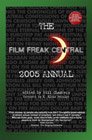
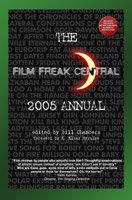
Unfortunately, even with all these pots on the stove, we may be forced to scale back on our coverage of current theatrical and DVD releases. The amount of money we earn from the site versus the amount of money it takes to run it and, well, survive is becoming increasingly disproportionate. (Perhaps only to cultivate a pointless sense of integrity, I refuse to clutter up the site with sponsored hotlinks or Google ads, not that they'd make a big difference in the long run anyway.) At the risk of guilt-tripping you, if you read us regularly, please consider purchasing the odd item through one of the site's many Amazon or PriceCompare links, tipping us via PayPal (donation links can be found at the top of most review pages), or buying our book, The Film Freak Central 2005 Annual (available @ Lulu, Borders, Amazon.com, and other fine retailers), which I'm told is a genuinely addictive read by people who were already familiar with its content.

I leave you with a direct portal to Walter's long-awaited review of Walter Salles' wonderful Dark Water--probably my 21st 'honourable mention,' for what it's worth.

Hot Off the Presses (1/13)
It's Bruckheimer Vs. Latifah. Whoever wins, we lose: Glory Road/Last Holiday. Jerry Lewis Fridays will resume next week. And Walter [insert tennis metaphor]s Woody Allen's latest, Match Point.

January 09, 2006

Notes from the Trenches

A difficult week – not screening schedule, that doesn’t start up again in earnest until this coming week – but dealing with the death in our FFC family and the uncertainty that arises whenever existential issues are bounced around. Lots of new films to see in the next week, and I’ll be honest that I don’t know how many of them I’m going to actually venture out to see. The way I felt by the last couple of months of last year isn’t something I want to revisit. I should be clearer. I should say that I'll see as many of the films as I can, but I want to move away from the self-imposed tyranny of producing 500-800 words on everything that comes out on the day that it comes out. I believe, after all, that your lists don't mean that much (as a professional who is expected to) if you don't see a good portion of the films that come out every year - but I also feel like I'm starting to write the same pans for all the movies that are bad in the same way. Five years at FFC and there's not much left for me to cannibalize before I get to the important bits.

I’m asked sometimes at these speaking events that I do if I ever get inured to the effect of films and the answer was always “of course not” until it was, suddenly, “yes, I just don’t care, anymore.” What I lost, see, was this steadfast optimism every single time I went to the movies that the movie could surprise me – there came a point where I was in fact certain that most movies could not, and would not even try to, surprise me. Is that the movies I had to see in 2005 – or is that me?

Here’s FFC’s Top Ten list for 2005. Open to chatting about what is, and isn’t, on the list.

In that spirit, Ebert wrote a long, interesting, angry defense of Crash that has already sparked a little debate in the last thread for its various and sundry wrong-headed stances and refusal to acknowledge any kind of validity in the opposition viewpoint.
But this is what bothers me about the piece – and it has something to do, too, with his zero-star review of Wolf Creek - Ebert talks a mean game about misogyny, but in calling Sarah Silverman “honey” in his review of Jesus is Magic, or by saying that Jenny McCarthy “has a technologically splendid bosom that should, in my opinion, be put to a better use than being vomited upon” in his Dirty Love review raises my eyebrow a little. Particularly as McCarthy has long-spoken of what her decision to get implants has done to her health and self-esteem - her decision to have her breasts vomited on, speaks to me of some kind of pain. Perhaps exactly the kind of pain that Mr. Ebert's "better uses" visited upon her throughout her life in the public eye, as it were.

Anyway, Alex defends Crash eloquently as imagistic – Ebert defends it as popular and embraced by "real" people. By that exact logic – I do wonder how it was that March of the Penguins didn’t share billing at the top of his list. And how Taco Bell avoids being tops in the Zagat survey year after year.

But, look, see, look here, more in Ebert’s essay in which he describes Bullock’s character in a certain scene: “She has just been carjacked at gunpoint and is hysterical”. Is she? Is “hysterical” still a term that we use without caution and irony? Or, in fact, is it a better condemnation of the film than a defense of it? Isn’t the argument that the picture indulges in that which it seeks to address? Hysterical rich white women. Check. The problem with the statement is the same one that I have with Crash, see, it’s a guy not examining his own fairly ugly predispositions by fooling himself into believing that by condemning Wolf Creek for the "right" reasons, for instance, that he is.

Tony Danza and Mr. Howard in Crash's best scene
And now, look, again: “As a black man in Los Angeles, Howard's character is fully aware that when two white cops stop you for the wrong reason and one starts feeling up your wife, it is prudent to reflect that both of the cops are armed and, if you resist, in court you will hear that you pulled a gun, were carrying cocaine, threatened them, and are lying about the sexual assault.” I wonder if that’s a checklist that the LAPD gives new recruits or if it’s Ebert’s fantasia about law and order in the City of Angels.

In other words, wow. You can make an argument that the world of Crash certainly supports that idea because it’s a vile piece of reductive middlebrow pandering – or you can say that Ebert’s playing both sides against the same middle as the film. His appreciation of the picture is easier to understand in that context. His grateful agreement in his Answer Man column to the fawning defense offered by a reader of his 2.7 star average rating (I’m actually floored that it’s that low – but then, I don’t know what mine is) is easier to understand, too. He offers that he doesn’t give more bad reviews because he doesn’t see as many bad movies like, for instance, Aeon Flux which, of course, he hasn’t bothered to see to know. He says that he goes out of his way to seek out small, independent films to champion and so, implicit in that, small and independent films are naturally always better (or that he artificially inflates his ratings for small films) and so, therefore, he rates more good films than bad and that’s why Cheaper by the Dozen 2 got 3 stars.

Cheaper by the Dozen 2, by the way is one of the most misogynistic and hateful pictures to come around since the last time someone with a “technologically splendid bosom” was made the butt of a weird, mildly disgusting (suggestions of bestiality) joke in a kid’s flick. (Was it Kangaroo Jack? I tend to block these things out.)

Speaking of which sort of – my reviews of Broken Lizard’s Puddle Cruiser and Dukes of Hazzard (the latter of which actually changed my feelings about Jessica Simpson) – and of Mel Brooks’ 1968 The Producers which I gotta’ say, I just don’t get and/or like. Travis weighs in on Disney’s latest DTV cash grab Kronk’s New Groove - and Alex takes a bite out of The Flesh Eaters


And so we move on into the New Year – older, and sadder.

Courage.

Currently reading Edmund Morris’ exceptional Theodore Rex and listening to the Nouvelle Vague covers album suggested by Rachel way back down there somewhere. Thanks, Rachel, it fucking rocks.

Here’s the capture, carry on:


Hot off the Presses (January 10)
Went to a filled-screening of Glory Road last night - was sort of like going to an arena to watch a Harlem Globetrotters match: the winner of it predetermined and the athletics the very sort of sideshow that the picture ostensibly disdains, with a crowd as primed and ready as that for a professional wrestling match. After much talk of the inferiority of "nigger ball" and the inability of the black athlete to embrace the nuances of the game, the African-American heroes are getting trounced until turned loose to play "their game" and whup up on the crackers. After an ebonics lesson in which "bad" is explained to the honkey as "good" ("but then, what's good?" "HA HA HA, oh, Cracker") and a lot of tap-dancing around how the players on the UTEP campus were treated like prisoners so that they wouldn't infect the student body, comes my favorite scene on a bus in which all the players have little transistor radios with which they teach one another about the squareness of white culture and the grooviness of black. The cherry on top? When power-forward Lattin produces a giant speaker. Yeah, baby, MLK might be two years from getting popped, but the brothers already had the boom boxes.

Much talk of the "Beverly Hillbillies" and "Green Acres" peppers the "good-natured" trash talk conjured up by our Munich-ian power martyrs (and a pre-game bleachers rah-rah by our fearless bwana includes "they said it, not me" classics like "you're athletes, but so are monkeys!"), but whenever there's a genuine cultural misunderstanding about Harlem by a farmboy who's never seen an African-American ("Boy! We ain't all from Harlem!" - no matter that one of them has as his dream job a gig starting for the 'trotters), or even a hint of a moment of surprise or a raised 'brow cast their way, the soundtrack gets all gospel on us. What I really like is how they make the 1966 game more exciting by inserting off-the-glass alley-oops and reverse-dunks (a Harlem Globetrotters performance, in other words - or the NBA circa 1990-now). Remember the Hoosiers, as Bill coined post-trailer, and it's actually worse. Sieg heil, my bruthas! Be afraid.

Back at the muthasite, Travis sings the blues as he assails the inimitable Ms. Ross (did you hear that she's dating Jon Voight? Gave my brain a charley horse for four straight hours) trying to imitate the inimitable Billie Holliday while being wooed by Mr. Smooth, himself, that treacherous, irredeemable, token of an ass-fucker, Lando Calrissian. He get's to be a general for selling Han into carbonite and wanting to abandon Luke on that weather vane and Chewbacca gets to be the dog. Shoulda' known a long time ago, man. George Lucas sucks.

Hot off the Presses (January 10, late)
Okay - so Kevin Reynolds' Tristan & Isolde looks exactly like his Robin Hood (does any other working director like back-lighting as much as this yahoo?) - and plays more than a little like the world's longest, most inscrutable perfume commercial.

Hot off the Presses (January 11)
Bill provides the DVDetails on Wes Craven's Red Eye and, fresh as a daisy, what appears to be the first national review of Tristan & Isolde. Remember what I said about January and vacations?

Peoples' Choice Award Results:
Female movie star: Sandra Bullock.
• Male movie star: Johnny Depp.
• Leading lady: Reese Witherspoon.
• Leading man: Brad Pitt.
• Female action star: Jennifer Garner.
• Male action star: Matthew McConaughey.
• On-screen matchup: Vince Vaughn & Owen Wilson (in "Wedding Crashers").
• Movie comedy: "Wedding Crashers."
• Movie drama: "Star Wars: Episode III: Revenge of the Sith."
• Family movie: "Charlie and the Chocolate Factory." •
Movie: "Star Wars: Episode III: Revenge of the Sith."

January 06, 2006

The Last Detail


A product of Hal Ashby’s early ‘70s output – and still my favorite of his films – I go to The Last Detail (1973) a lot, maybe once a year, to recharge the batteries. It features one of Jack Nicholson’s definitive performances, coming three years after Five Easy Pieces and one year before Chinatown: here, he’s whippet mean and full of snarls, just one step removed from pathetic, and seething with the misplaced, desperate braggadocio of the end of the ‘60s as all the seeds of governmental corruption (and an unpopular war against an invisible, and resolute, foe) took root in our collective as feral Baudelarian flowers. With Nicholson’s personal life a tumult of hidden identities and sordid abandonments and Ashby’s similar (his father committed suicide when Hal was just a kid), the two found a project in The Last Detail that is, in essence, about the inadequacy of surrogate father figures especially when they take the form of traditional institutions of authority.

There’s no comfort in The Last Detail, just the rough-hewn edges of how men are hamstrung by social conventions into roles of aggressor and victim (and, indeed, father and son). It’s one of the saddest, most hopeless pictures about relationships between men to emerge in the fulsome American ‘70s (another: John Huston's Fat City), a classic of observation (listen to the way the characters talk to one another), and a marvel of satire in its ability to skewer race, class, and that most primary of ‘70s concerns, social law and order, with gratifying understatement and the unbearable weight of dread and melancholy.

The story details the last trip of poor kleptomaniac Meadows (Randy Quaid), being escorted to a military prison to serve a bloated (8 yr.) sentence at Portsmouth Naval Prison by career Navy men Bud (Nicholson) and Mule (Otis Young). They’re sidetracked, of course, and spend their travel money showing Meadows what he’s going to miss while he’s locked away. A scene of the three cooking hotdogs in Central Park in the winter speaks to how the film works as an examination and undermining of basic images of Americana as well as, tonally, how The Last Detail is both warm with bonhomie and chilling in its implications. The looming threat of unjust imprisonment colors the piece with melancholy – and just as Meadows is finding his spiritual footing and invited, in essence, into the adult world by men he takes (to his peril) as role models, he’s spirited away - eternally the stunted child - without a look behind. An elegy too, then, as so many films were in this period, to the grand hopes and unfettered idealism of the ‘60s, The Last Detail, on a personal level, represents to me the possibility for a small, dialogue-driven film to mark the line between what we’ve lost and what we’ve become in the losing of it. It's about how men are incapable of being other than what they're programmed to be, and a suggestion that all of our rebellions are just insignificant skylarks doomed to be corrected by our failures as dreamers: aspirants to the promise of our better selves.


The Last Detail is Malick in microcosm: written by Robert Towne and shot by Matthew Chapman, and to our horror, as topical now as it ever was.

Update (1.7.06)

This may be old news, but I just learned that Cache will not be eligible for the foreign language Oscar because it's an Austrian film, but shot in French - not German - leading me to want to break shit.

Also, check out the fair and balanced Fox News' rabble-rousing declaration that the Silver Screen is subversive. Yeah, I wish.

Update (1.8.06)

Aaaaaand, a theater in Utah declines to show Brokeback Mountain.

January 02, 2006

Notes from the Trenches


Still on “winter break” as it were with the studios having screened us to death in the couple of weeks leading up to Christmas and allowing us now to breathe a collective sigh before the avalanche of garbage too awful for release any other time of the year is dumped on us between now and sometime in the middle of March. There’s a reason that most professional critics I know take long vacations in the month of January.

For the middle states and outlying markets, however, this is the kick-off to a period of slow-releases for stuff like The New World (reportedly twenty-minutes shorter than the print screened for critics in December – and I don’t think that Malick is being pressured to make the trim), The Three Burials of Melquiades Estrada, Match Point, Caché, and so on. What’s really taken me by surprise this year is the sheer number of quality films that never had a hint of a screening in Colorado for any of the major critics (for me, neither) – films like Herzog’s The White Diamond and Weerasethakul’s Tropical Malady that are both now available on DVD and are both serious flicks that deserve serious looks.

Jonathan Rosenbaum wrote once about how it’s not entirely a matter of the popular audience having no taste so much as it’s all tied up with the truism that the popular audience often doesn’t have a choice. Go to the one cinema in a one-horse town and you get to watch the penguin movie or Whale Rider for eighteen months. Even Denver, a two-horse town, only has around twenty screens devoted to independent film and all twenty of them are programmed by Landmark which is, I think, based in Seattle nowadays besides having other interests besides growing an audience in mind. The thought that we’re often not even allowed to indulge in our better selves when it comes to films gains a scary kind of mileage.

It’s a brave new world: made braver by the release of Steven Soderbergh’s Bubble in a couple of weeks, simultaneously on Pay-Per-View, DVD, and theatrically. The Mark Cuban’s experiment – it makes you wonder if it’s an idea that presages a seismic event, or if it’s just a ripple on the pond.

Speaking of Tommy Lee Jones’ directorial debut (from a script by Guillermo Arriaga of 21 Grams, Amores Perros fame), Three Burials is essentially Crash 2: Cormac McCarthy with the weight of cosmic ironies in its tale of racial intolerance and good, ol’ fashioned Old Testament retributive justice, handily submarining the mood of the piece which is, all things considered, pretty good. The gem is The Band’s legendary drummer Levon Helm in a bit part as a blind guy Jones and the comic-book super-bigot played by Barry Pepper come across in their odyssey across the border. He’s freakin’ amazing in a film that boasts as its only other real innovation the discovery of a new Bridget Fonda: flawless, aquiline, largely inexpressive January Jones.

Best Supporting Actor of 2005? Levon Helm

and, while we’re at it, Best Supporting Actress – always a tough call – I’m going with either Robin Wright Penn for Nine Lives, Amy Adams for Junebug, or Maria Bello for A History of Violence.
Best Actress would be Dina Korzun for Forty Shades of Blue: a genuinely affecting and unsettling performance that, in moments, demonstrates the physical manifestation of emotions in ways courageous and jaw-dropping. I loved Jennifer Connelly in the badly underestimated Dark Water, too, and Ms. Kilcher’s turn in The New World as the eternally un-named Pocahontas.

Charges of racism in The New World and King Kong, by the way, are largely kneejerk and off base in my mind: but they’ve inspired a flurry of white, middle-class critics across the country to finally take up the flag (including in my own backyard! especially odd because he’s not the paper’s critic, and the paper’s critic, curiously mum, is an African-American woman) when these same crix have been conspicuously silent for the most part on genuinely, maybe even willfully, appalling pictures (racist, misogynistic, badly done, the whole nine yards) like Hustle & Flow.
Best Actor? Let’s give it to Damian Lewis in a runaway race for Keane. The unlikelihood that he’ll even be mentioned come awards time should only magnify his esteem.

Best Gay Cowboy Movie: Brokeback Mountain
Best Gay Musical: Rent
Best Breakthrough Gay Movie: Tropical Malady

Caché, by the way, lives up to the hype. A film touted as without an ending that actually has an ending – and one of the most fascinating looks at the process, and innate aggression, of viewership since Peeping Tom. It’s a metaphysical horror film – a picture a lot like A History of Violence but without the soothing tones of a familiar infra-structure. Doesn’t make it necessarily better or worse, but it does make its audience smaller. I’m a huge fan of Haneke’s Code Unknown, The Piano Player, and the apocalyptic sci-fi’er Time of the Wolf - and Caché, scavenging the most elements from his legendary mindfuck Funny Games, represents something of a second-tier work by the Austrian. Which is, of course, pretty spectacular in any time.

The Best Munich: Batman Begins which, with one line about the escalation of freakism (Joker sighting) following Batman’s reign of righteous vengeance (spreading terror and destruction throughout the city he seeks to protect from terror), says with eloquence what Munich says for 165 minutes to steadily diminishing-returns. Give Spielberg credit at least that the supporting Jews in his film didn’t all slot themselves into the polite, well-behaved Jew stereotypes of Schindler’s rescued Jews (affecting only en masse said J. Hoberman, once upon a time) – though the one I remember most is the lovable Mossad accountant who gets the film’s biggest laughs demanding “Receipts! Receipts! Receipts!”. Hilarious, am I right?

I won’t pretend that my affection for gravid comic book movies doesn’t have something to do with the fantasy of dressing up in rubber and smiting evil-doers whilst gaining the doe-eyed attentions of hot, but sexually un-threatening women – but like a good fairytale, I think a good comic book premise allows for maturation, meat, and escalation if one were so inclined. Whether one should be so inclined is another matter, I guess, but I for one would love to see the proposed $100m HBO miniseries adaptation of Alan Moore’s astonishing The Watchmen come to fruition.

(this faux-teaser poster for a Batman Begins sequel is fan art from a German website, taking the visage of Conrad Veidt and photoshopping it to their Bavarian hearts’, and ours’, delight)

Two Random Thoughts and One Dire Prediction to Round Out 2005

The Dukes of Hazzard is exactly the same movie for dumb boys that Herbie: Fully Loaded was for dumb girls. Nearly identical, really, with the same soul-sucking emptiness, the same racing subplot and the same ear-blowing veneration of revving noises.

For the first time in ages, Sundance produced a couple of real gems: Junebug, Forty Shades of Blue, and The Squid and the Whale. It also produced the abovementioned Hustle & Flow and March of the Penguins which, incidentally, inspired some right-wing wackos to declare that these animals’ nightmarish journey was proof positive that theirs was a universe of intelligent design governed by a just and reasonable god. You could for a while download a checklist to take with you to the theater (flashlight in hand, of course) to mark all the places that God speaks to you through this stirring, Morgan Freeman-narrated testament. I like this article by Andrew Sullivan from London’s Sunday Times that talks a little about penguin monogamy, transgenderism, and homosexuality.

If I have one prediction for 2006, it’s that the success of this and Narnia 1 will inspire more directed marketing to groups like Focus on the Family which, and really folks I’m not going out on a limb saying this, is like making a film and crafting its marketing campaign explicitly for the enjoyment of the Taliban. Why don’t they make a movie about how the most visible/vocal factions of the Christian right are trafficking in fear-mongering, exclusion, ignorance, and hate? Oh wait - maybe they have.


Here’s screen capture #3.2, and the first of the New Year:


December 31, 2005

In Memorium

A note that the FFC mutha-site is going unofficially “dark” until next Saturday. The first extended blackout in our eight-year history, I think. And while this blog will be active in the interim, we’re putting a card in the window (pushing our Top Tens as well as reviews of Match Point (**1/2/****), The New World (****/****), Caché (****/****), and The Three Burials of Melquiades Estrada (*1/2/*****) one week into the New Year): not “gone fishin’” but sort of licking our wounds.

We’ve lost a member of the family: Bill’s father passed away yesterday. It was sudden: a cancer undiagnosed for three years took mortal hold a week ago, and now before we had a chance to readjust to it all, he’s gone.

Bill’s the heart and soul of FFC – without him, the gears don’t turn. Our hearts are broken. And while movies can be a wonderful way to escape reality, sometimes reality catches us. It can be a sonuvabitch that way.

So we’re taking a week with the new updates – but tomorrow night, I’ll be here with a new Trenches – talking about the best performances of the year (take a look at Reeler’s fairly brilliant Top Ten Top-Tens – which had me until they offered up their suggestions of what should be on the year-enders instead. Stick to the snarky ombudsmanship, boys), and a little of what 2006 might have to offer the beleaguered Silver Screen.